Driving Circular Economy Innovation in India and Kenya
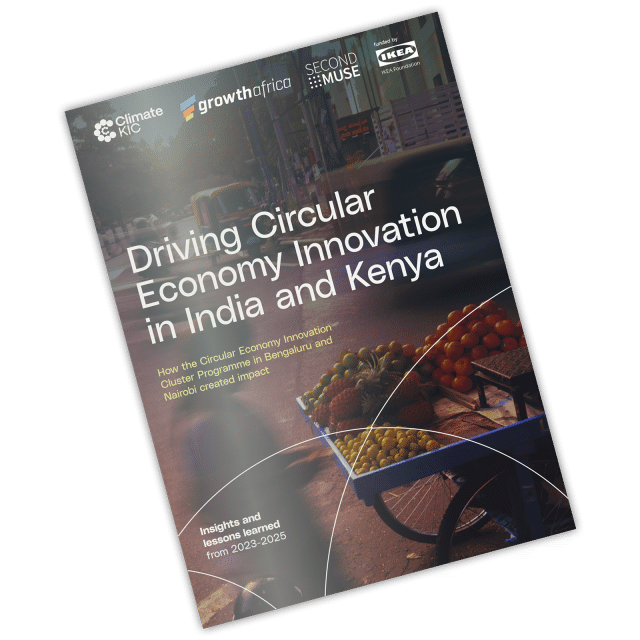 |
How Bengaluru and Nairobi built programmes that reduced waste, supported informal workers, and created lasting systemic change This new report reveals what it takes to shift urban economies towards waste prevention at the source. |
The challenge
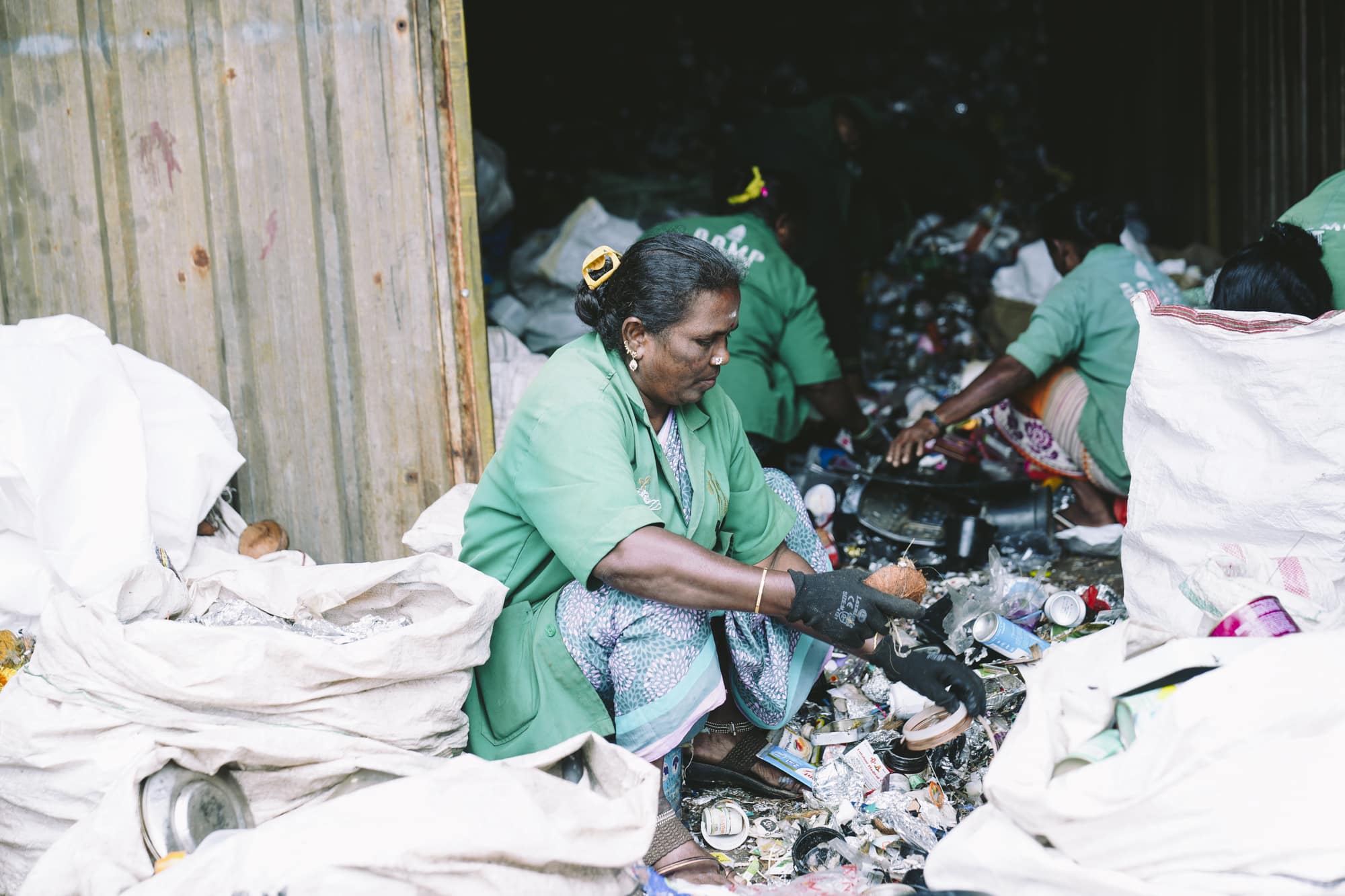
Bengaluru and Nairobi generate over 2 million tonnes of waste annually. Most support focuses on managing waste after it’s created. Meanwhile, preventing waste at the source remains largely underfunded and overlooked.
Transitioning to circular economy principles; designing waste out of product lifecycles, keeping materials in use, and regenerating natural systems, offers a pathway to address this issue. However, this transformation goes beyond the capacity of any single entity or group.
The solution
Co-designed and delivered by Climate KIC, GrowthAfrica, and SecondMuse, and funded by the IKEA Foundation, the Circular Economy Innovation Cluster (CEIC) programme set out to tackle this challenge by catalysing system-level transitions toward circular, low-waste urban economies.
Over three years, the programme led to:
What we learned
What worked
What didn’t work as expected

Who is this report for?

You’ll find this report valuable if you’re interested in:
- Ecosystem building, innovation clusters with systems change approaches
- MEL (Monitoring, Evaluation and Learning) as a driver of programme adaptation
- Circular economy and waste prevention investments
- Effective programme design in international development
This report sets out to:
- Present learnings from the initial phase of the project (2023–2025) and highlight the innovation cluster approach and its potential for systems transformation
- Showcase MEL as a driver of programme adaptation, decision-making, and impact