
Climate KIC supported report shows how to reduce industrial CO2 emissions
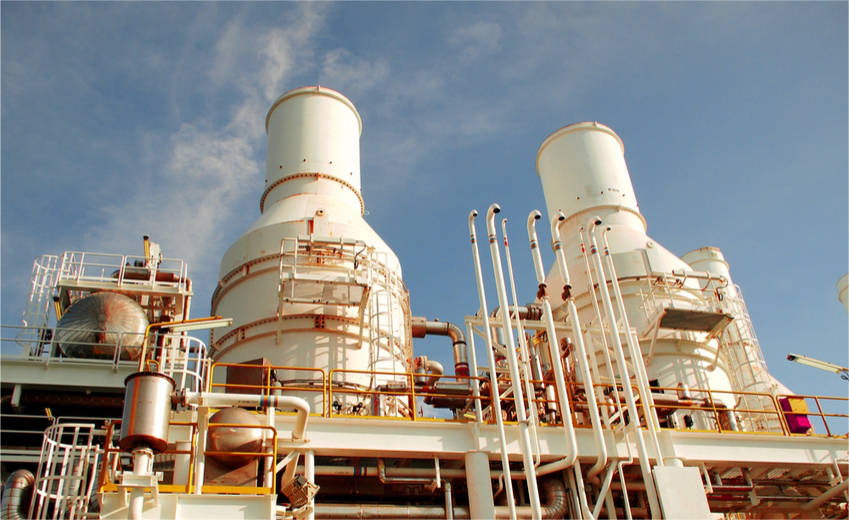
A new joint report, published by RWTH Aachen University in Germany and UC Santa Barbara in the United States, explores the economic benefits of an innovative use for CO2 emissions coming from chemical products such as plastics and paint. To reduce greenhouse gas (GHG) emissions and to reduce fossil fuel combustion, carbon dioxide can be captured from industrial smokestacks and utilised as an alternative carbon source for chemical production.
Chemical products are mainly manufactured from oil and natural gas, which in turn have their own impacts on the global climate. Carbon capture and utilisation (CCU) could significantly contribute to decarbonising the industry and to mitigate the effects of climate change. The research, published in the renowned American journal Proceedings of the National Academy of Sciences (PNAS) and supported by Climate KIC, noted that chemical production is set to become the single largest driver of global oil consumption by 2030.
The international team of engineers and academics behind the report estimate that annual GHG emissions could be reduced by up to 3.5 gigatons of CO2 in 2030. These savings represent about 6.5 per cent of global greenhouse gas emissions in 2017 (source: IPCC).
However, in order to exploit the potential of CCU, more than 18.1 petawatt hours of electricity per year would be needed, corresponding to 55 per cent of the projected global electricity production in 2030. This significantly exceeds current renewable electricity production targets. The report has already spurred interest from the wider public, including a mention in the magazine the New Scientist, which highlighted that such a greening of the chemical industry required a significant increase in the electricity generation capacity of renewable energy sources.
Climate KIC is financing further research into the infrastructure needed to make European heavy industry carbon neutral, including investments into the continent’s renewable energy capacity. The findings of the research will be published later this year.
Dr. Arne Kätelhön, team leader on life cycle assessments at RWTH Aachen University said:
“Systems research on the important topic of CCU in the chemical industry is underfunded. As Climate KIC was one of the principal funders of this project, we were very grateful for this support. It was also extremely useful to be a part of the broader Climate KIC community as the connection to chemical industry companies and other academic bodies was essential whilst carrying out this research.”