
Who gets paid to look after nature?
By Christian Daube (Climate KIC), Lucky Michaels (Environmental Conservation community of Tanzania) and Lilla Albert (Climate KIC)
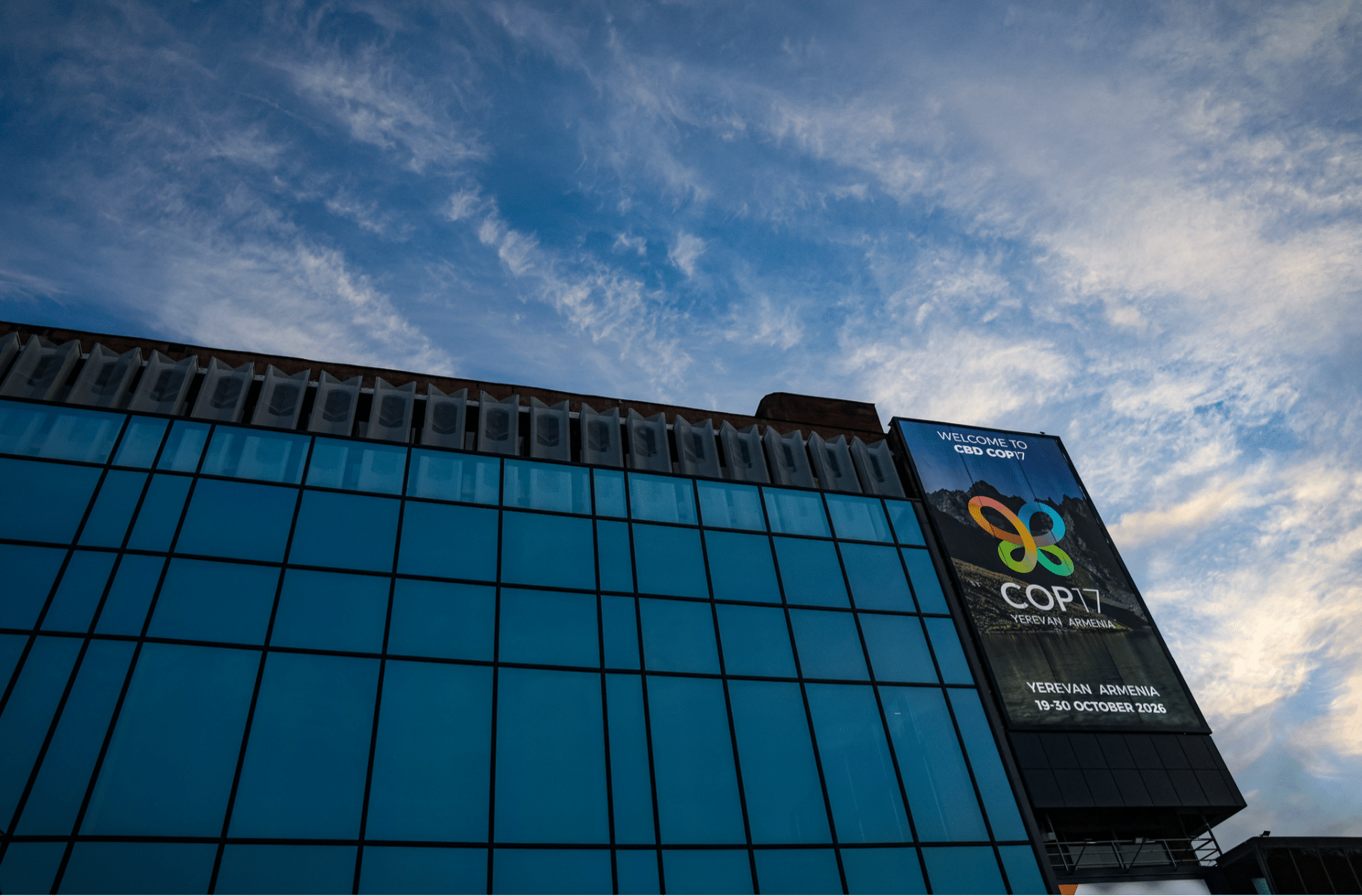
COP17 in Yerevan, Armenia, the first global review of the Kunming-Montreal Global Biodiversity Framework, was a summit often found fighting over single words. Negotiators argued late into the night over whether nature and climate face interconnected ‘crises’ or merely ‘challenges’, whether to ‘welcome’ the High Seas Treaty or simply ‘take note’ of it, and even whether to use the word ‘synergies’ at all. Behind each word, and the discussion about the merits of its inclusion, sat a deeper question. Who pays for nature, and who decides how it is paid for? The three of us, two from Climate KIC and Lucky Michaels, a youth leader restoring mangroves in Tanzania, came to Yerevan to ask and seek answers to that question.
The CBD COP review confirmed what many of us in the room already knew, that the world is falling behind on 22 of its 23 nature targets for 2030. Current commitments would protect about 26% of land and only 12% of the sea, far from the 30×30 goal agreed in Montreal in 2022. The other 30×30 goal, restoring 30% of degraded ecosystems, gets even less attention, though it is where farmers, fishers and coastal communities earn a living from nature.
We came home convinced that we lack an economic model that pays properly for looking after nature, and that we keep slicing nature into whatever our current agenda needs. That was the question behind the panel we hosted in the CBD COP17 Green Zone, “When Everything Becomes ‘Climate”. Lilla Albert (Programme Manager, Climate KIC) moderated a discussion with Robert Sheridan (Third Secretary, Department of Foreign Affairs and Trade, Government of Ireland), Adam Ó Ceallaigh (Director, Oileán; Ireland’s Climate Youth Delegate), Sultani Saidi Mtinda (Country Operations Manager, Tanzania Youth Biodiversity Network), Lucky Michaels (Executive Director, Environmental Conservation Community of Tanzania) and Christian Daube (Climate Entrepreneurship Co-Lead, Climate KIC). Part of the answer as to why biodiversity keeps falling behind climate is because of how narrowly we see nature.
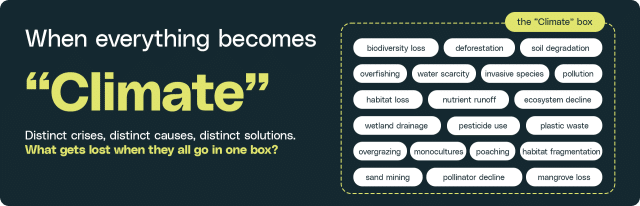
The question we put to the COP17 Green Zone panel, Yerevan, 26 October 2026.
“Even at Climate KIC, when we talk mitigation, nature becomes carbon; when we talk adaptation, it becomes protection. Both are true, and both miss the point. Nature is not a service we draw on. It is the foundation we all stand on.”
Lilla Albert, Climate KIC
Money doesn’t grow on trees
Also in Montreal, countries promised to mobilise $200 billion a year for nature by 2030, enshrined in Target 19. OECD data puts actual flows at $75 to 92 billion a year between 2023 and 2025, less than half the goal.
The dedicated funding vehicles echo this. The Global Biodiversity Framework Fund received less than $140 million from developed countries over the past two years. The Cali Fund, meant to channel a share of corporate profits from genetic data to conservation and to Indigenous Peoples and local communities, ended COP17 with $10,565 in pledges. Around $500 million in new pledges went to funds managed by the Global Environment Facility, including the first ever pledge from a city, Berlin, while the questions of who else should pay and how nature will be financed after 2030 were pushed to COP18.
Partners, not beneficiaries
On the Tanzanian coast, Lucky launched the Mangopreneurs programme, where restoring mangroves becomes a source of income for young people and women. The same forest stores carbon, shields coastlines from storms and flooding, and sustains the fisheries that coastal families rely on. Mitigation, adaptation and livelihoods are not three projects here. They are one ecosystem.
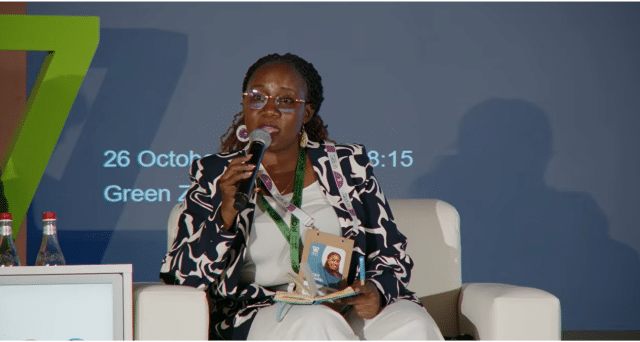
Lucky said: “If we protect mangroves only for the carbon, we leave communities behind. We see the whole ecosystem, the fishers, the young people, the women. They are not beneficiaries of our projects. They are our partners in everything we do.”
Starting from the most exposed
Our participation in Yerevan was supported by Ireland’s Department of Foreign Affairs and Trade. Around 89% of Ireland’s total climate finance goes to adaptation and 15% dedicated for biodiversity (35.9m last year alone), much of it locally led, starting from the countries (LDC and SIDS) that have done least to cause these crises and are most exposed to them. Whether we call it climate, nature or biodiversity, this matters less than who is at the centre of the impacts of nature loss and climate change.
“What I see as so important is matching the ambition of young people, their excitement and their fresh understanding of the world around us, with an older generation’s knowledge and understanding of nature, especially in an island community,” says Adam Ó Ceallaigh, whose organisation Oileán runs the Island Youth Network.
This is the spirit of our adaptation innovation cluster in Tanzania. Read more about it here.
Almost everything we saw in Yerevan operates as projects, while nature loss operates at the scale of whole economies. Business was in the room, but not in the numbers, or with the buying power, the moment needs. That is partly a problem we have built ourselves. Climate and biodiversity are negotiated in separate processes, in separate rooms, on separate timetables, so companies, finance ministries and even our own sector are pushed to prioritise one over the other.
Policy sets the signals, the mood and the confidence of businesses to act. Public money helps to de-risk investment in the innovation, the inventions and the entrepreneurs. Private capital investment, though, requires predictable revenues. Until someone pays for nature outcomes in the normal course of business, investment in nature will stay concessional, scarce and fragmented.
Removing the incentives that work against nature is a big part of the answer. The negotiated text on Target 18 was soft, but the momentum was not. Incentive reform dialogue moved from the margins to the mainstream, partly because governments can no longer afford to pay for the damage caused by extreme weather events exacerbated by climate change. Reform makes sustainable producers competitive on price and gives investors confidence.
So the question we would put at the centre of the next CBD COP is simple, where is the demand coming from, and who earns the income from it?
For example:
- Public procurement
Cities and regions are buying food, electricity, timber and construction materials for public sector institutions from schools to hospitals to town halls. They could be writing stronger nature outcomes into contracts worth EUR billions. - Supply chains
Retailers and manufacturers can turn sourcing standards and agreements into long-term purchase (known as offtake) agreements that give producers a reason to restore land as it is used. - Risk and insurance
Insurers and infrastructure owners could price wetlands, reefs and floodplains as natural flood and storm defences, which is what they are.
This is the work Climate KIC exists to do, joining up policy, finance and communities in specific places, and building portfolios of solutions that reinforce one another. Through the Global Resilient Industry Initiative (GRII), we are now building incentive reform into policy work for nature and resilience alike, and look forward to sharing more together with UNIDO around COP31.
Three asks on the road to 2030
There are just over four years left to meet the Montreal targets. COP17 closed with the “Yerevan Pathway”, and its diagnosis is blunt. Unless climate and nature action is rapidly accelerated, the goal to reverse nature loss and meet the 23 targets by 2030 will not be achieved. It calls on countries to revise their biodiversity plans, with a particular focus on marine, coastal and inland water ecosystems. That is a welcome priority for the ocean.
- Bring the megabuyers in. More than 130 businesses and financial organisations called on governments to reform nature-harming incentives before COP17, and around 500 industry and business representatives were present in Yerevan. Subsidy reform shifts markets only when buyers act on it. COP18 in Quito needs procurement officers, retailers, insurers and asset owners in the room, committing to buy nature outcomes as well as fund them.
- Build pipelines with communities as partners. COP17 created a financial mechanism for nature after 2030 but pushed the agreeing of the details to COP18. That gives us two years to shape what it funds. Revised national biodiversity plans are the moment to turn ambition into investable portfolios, designed with the people who look after these places, who should earn a fair share of the revenue and have a real say in how their land and waters are used. As nature markets grow, they also need real integrity, the COP has asked for a study on whether biodiversity credits and offsets deliver additional benefits.
- Integrate climate and nature targets, don’t merge them. Businesses have spent a decade absorbing mitigation targets, now come nature targets, then adaptation. The answer is not a separate box for each, and not one big climate box either. It is tools that let companies and communities see carbon, nature and resilience side by side, each measured on its own terms, so that a mangrove counts as a carbon store, a sea defence and a fishery at once, a system view. Those of us outside the negotiating halls must practise the synergies negotiators could not agree on; pool pipelines, share what we learn and offer funders joined-up portfolios. The cost of competing for the same grants is one that nature, which includes humanity, cannot afford.

