Who owns Europe’s climate risk? At the moment, nobody.
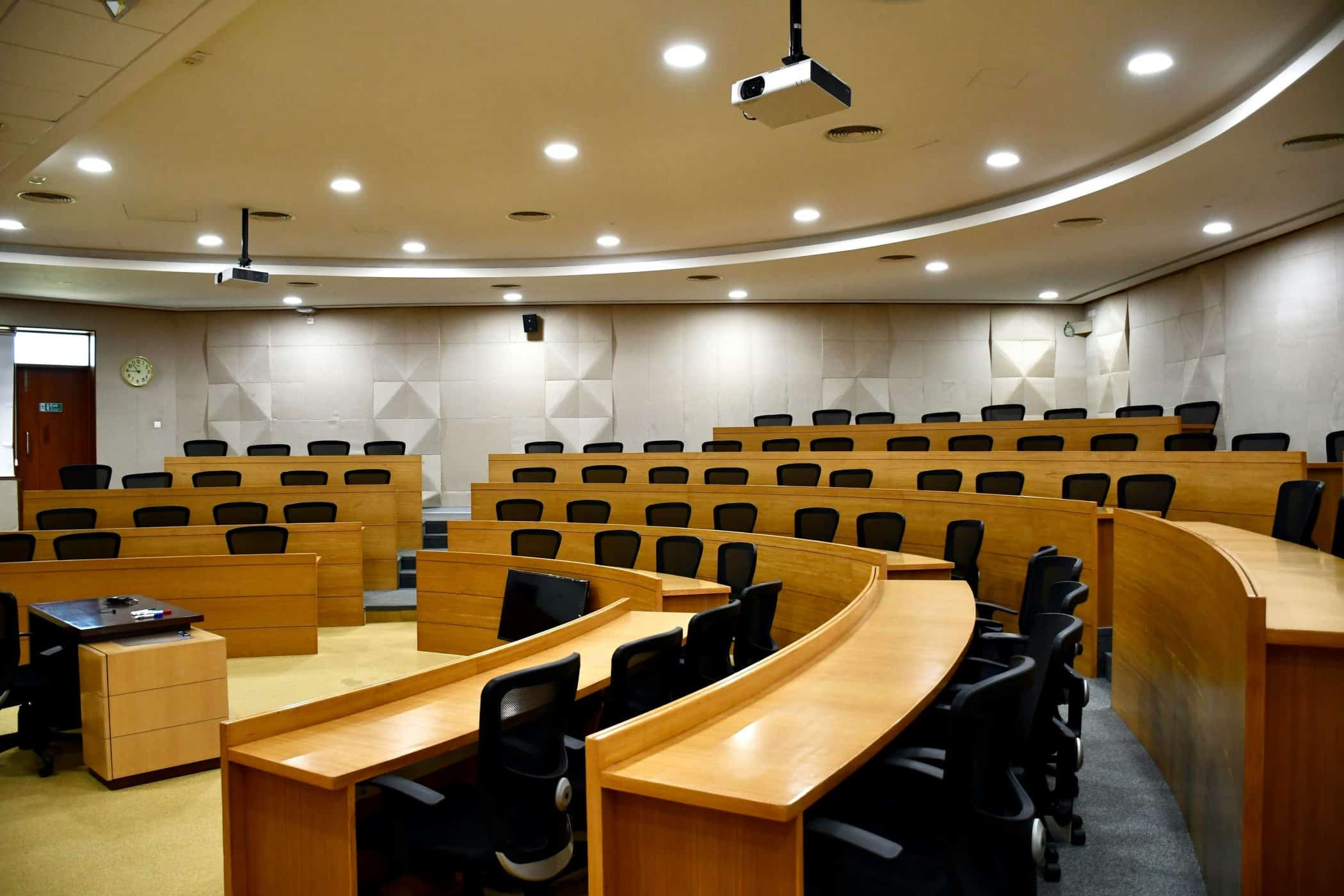
Reflections on the Climate KIC event “Resilience in The New European Summer”, co-hosted by Kristian Vigenin MEP and Grégory Allione MEP, June 2026
When the heat arrived in June, the machinery of EU adaptation clicked into gear. Alerts went out, cooling centres opened, the Emergency Response Coordination Centre did what it was built to do, and there is no doubt that the cost to human life – some 10,000 excess deaths across Europe during June – would have been higher without it.
This is the approach Europe has spent two decades perfecting: anticipate, alert, respond. Since the catastrophe of 2003, a summer that saw over 70,000 excess heat deaths, adaptation measures such as heat-health warning systems have saved tens of thousands of lives and rescEU has given Europe the surge capacity to meet disasters that no member state can face alone.
Both instruments are needed. But a capacity built to absorb shocks is now being asked, summer after summer, to absorb a trend. One quarter of all the climate related financial losses Europe has recorded between 1980 and 2025 fell in the last four of those years: €208 billion. In the old European summer, the problem was whether Europe could respond to heatwaves. In the new European summer, responding will not be enough.
This was the central conclusion of “Resilience in the New European Summer”, an event organised by Climate KIC at the European Parliament last month and co-hosted by Grégory Allione MEP and Kristian Vigenin MEP. Also speaking were Director Elina Bardram of DG CLIMA, hydrologist Dr. Daniel Zimmer of Climate KIC, and Stéphanie Richard, a nurse and founder of Care-Act-Terre. As Climate KIC CEO Kirsten Dunlop put it during the event, Europe has not been slow in “cleaning up” after crises, but now needs to build capabilities for “agile anticipation” too.
Why does a continent that responds to crises so well, adapt to this new reality so slowly? Because the shock has owners and the trend does not. A heatwave in progress has a directorate, an operations room, a legal instrument in the Civil Protection Mechanism, and a budget. The creeping vulnerability of buildings, farms, forests and hospitals to rising temperatures belongs to nobody. Formally it sits with environment ministries, which do not build housing, run hospitals, or write agricultural policy.
The European Environmental Agency’s (EEA) 2025 assessment of climate resilience found that every member state now has an adaptation policy on paper, and that implementation is held back everywhere by the same things: unclear risk ownership, uncertain financing, and coordination that fails across sectors and levels of government. The Commission reached the same conclusion in 2024. The imperative is to assign risk ownership to the appropriate level and support those newly responsible. As Elina Bardram put it, “climate risk management is not the responsibility of environment or climate ministries. All sector ministries exposed to climate impact need to realise that business is no longer as usual.”
Assigning ownership means two things. The first is sectoral responsibility: agriculture ministries owning drought risk, energy ministries owning the temperature of cooling water, and health ministries owning the heat resilience of hospital wards. This final point, as Stéphanie Richard underlined at our event, is “not a question of comfort, but survival.” The second aspect of assigning ownership is a number to plan against, because a risk owner without a specified risk is hollow. This would be Europe “coming to terms with reality”, as Daniel Zimmer emphasised. France has set one: the TRACC, with its reference warming trajectory of France at +4°C in 2100, gives every French planner the same assumption, so that a hospital, a vineyard, and a rail line are all designed for the same future. The EU has no unified equivalent, which is one reason its own risk assessment found member states’ planning assumptions too divergent for a coherent picture of shared risk. The economics are not in dispute: the Global Commission on Adaptation puts benefit-cost ratios for adaptation investment between 2:1 and 10:1.
Are these facts enough to change anything? We will soon know the answer. The European Climate Resilience and Risk Management Integrated Framework is due in the Autumn of 2026 and, as Kristian Vigenin MEP said, it “must be implementable and ambitious”. The plan will be judged on whether it assigns climate risk to the sectors that hold the assets, gives them a common trajectory to design against, and funds the mandate. A framework that exhorts without assigning may suffer the fate of the 2021 Adaptation Strategy: universally adopted, thinly practised. Grégory Allione, the firefighter who became a legislator, put it clearly: “It is much cheaper to prepare than to repair.” Europe has proven it can repair. If it cannot prepare, the bill will climb with each new European summer.
The opinions expressed in this article are those of the Climate KIC author only.