What kind of soil do you live on?
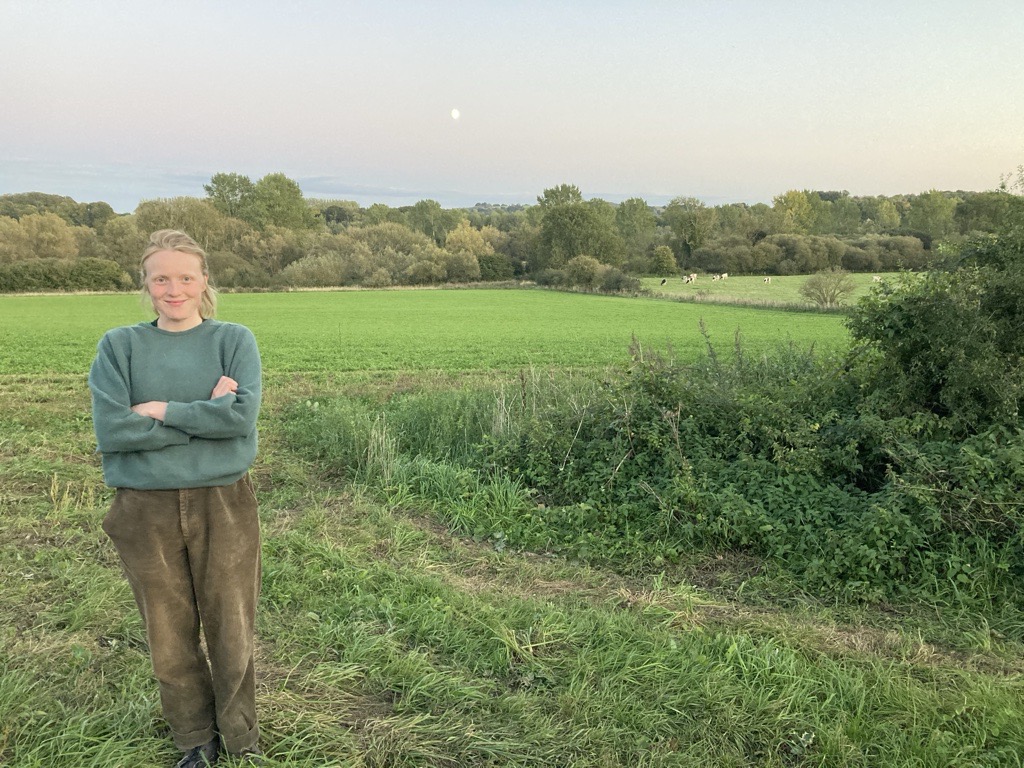
A couple of years ago, in a meeting for a soil project, I asked everyone in the room to stand up depending on what kind of soil they lived on. Clay? Loam? Silt? Sand? There was some hesitation. Then I asked everyone who didn’t know to stand up. Almost everyone did.
People laughed. But it wasn’t particularly funny. Here was a room full of people working, in one way or another, on soil – and many of us couldn’t describe the ground beneath our own homes.
I confess, for a while afterwards, I doubted the group’s sincerity for their topic. I focused on the idea that if you don’t care to know about the soil where you live, do you really care about it at all?
Looking back, this was rather unfair of me. I had forgotten how unusual my relationship with soil was. I grew up on a farm, and that was an enormous privilege. Although we didn’t discuss it around the dinner table, soil was very much a part of my childhood. I made mud pies and was tuned into the rhythm of the seasons through how bare, green or golden the fields were. I was deeply proud that my dad’s farm was on heavy clay-loam. James Rebanks, in A Shepherd’s Life, gave me the word to describe this childhood; like a sheep on the commons, I was hefted to the land.
Unless you have a connection to soil, it is easy to miss it. It’s hidden for one thing – soil should be covered. In cities it is quite literally paved over. In the decade I spent in a town, my connection to the soil all but evaporated, the game of how busy I could be – and look – took over. A by-product of modern life, and, as Alice Waters calls it, our ‘Fast Food Values,’ is our separation from nature, and from the soil. Soil has a further complication; its degradation is gradual and difficult to spot. A flood is visible. When a river bursts its banks, photographs can travel around the world within minutes. How many of us see the devastation of a flood and think about the ground the rain fell on?
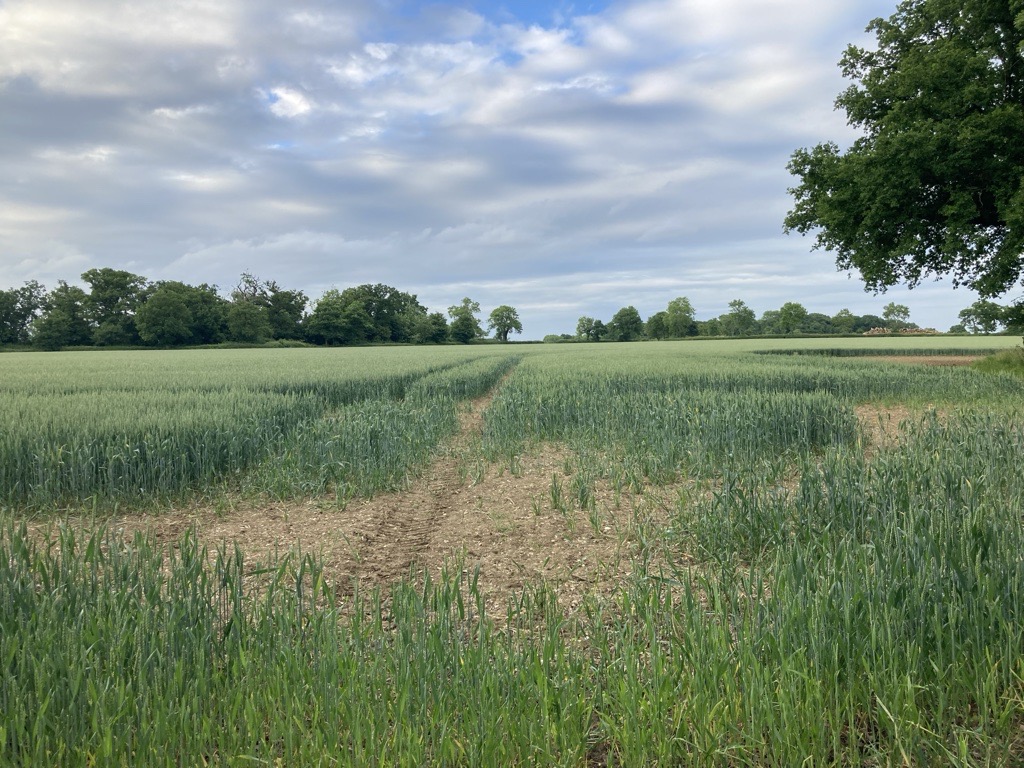
Soil should be covered. This wheat suffered from compaction on the headlands, and the situation was worsened by the summer drought.
Soil can deteriorate quietly for years while life above ground continues much the same as before. Amazon will still deliver, there is always Netflix after a long day, and there will continue to be strawberries in February. A park still looks like a park and a field like a field.
This leads to an important point that soil scientist and former Climate KIC colleague, Saskia Keesstra and her co-authors identified a decade ago. They argued that soil science needed to look beyond the soil itself; to show more clearly how it connects to food, water, climate, biodiversity and health, and to get that knowledge beyond the scientific community.
I would argue that this is not enough. Ecosystem services, as they are known, can still feel a long way from everyday life. We might understand that healthy soil helps landscapes function well, but do we connect what we see around us with the choices we make? This year, when wheat yields plummeted in the drought, did this affect our buying habits? When the grass in our parks turned brown, did we think about whether these spaces could become meadows rather than lawns?
If we have no space to encounter the soil directly, it needs to be brought into our lives through other ways. This matters because, whether we feel connected to soil or not, our food choices, buying habits and lifestyles all affect the soil somewhere. I think the feeling of being hefted to your local ground needs to be engendered. A small cultural shift, if you will.
I have been testing this idea at home. I now live on a farm again; it is my in-laws’ farm, and chalky, so I haven’t got into it in the same way as if it were my own. I made an A–Z of soil as a fun way to teach my boys and some other children their letters. It is yet to work particularly well as an alphabet, but it is bringing the soil back into our lives. Yesterday, when steam-ploughs worked a field on the farm, we spent the morning sitting in the furrows digging, looking for worms and watching these magnificent pieces of history turn the soil over. Again, I feel hefted to the land and the soil and reminded why we should care about its health.
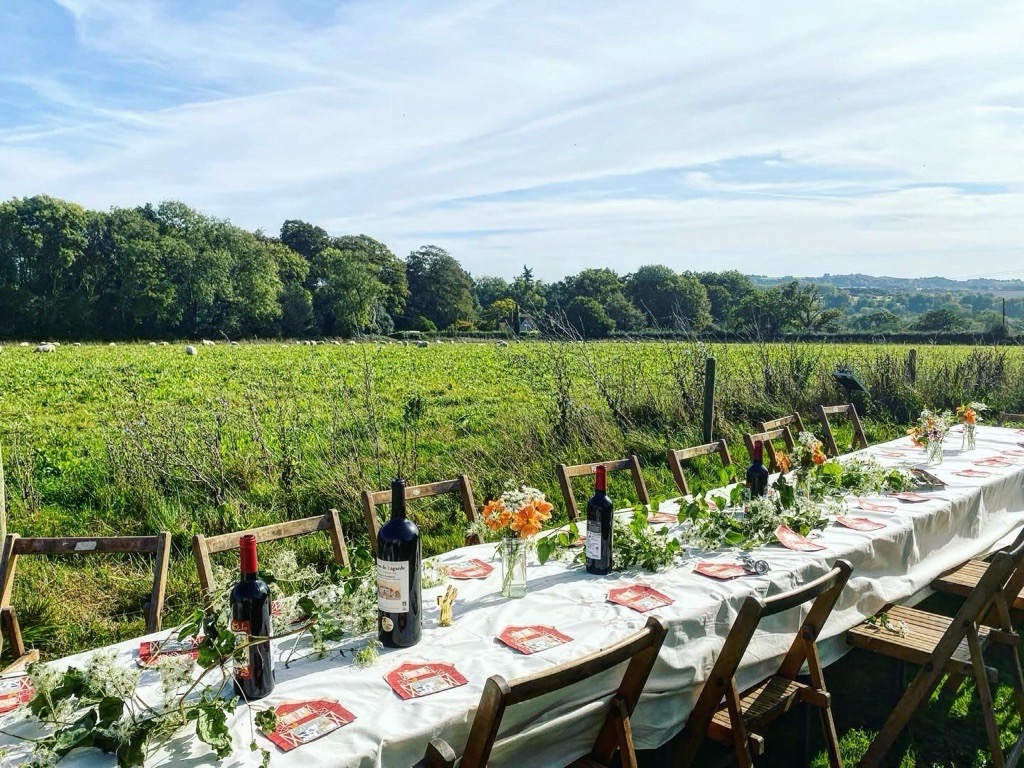
Laying the table for lunch on the farm.
That is what excites me about the EU Mission Soil Living Labs I work with, through the Support Structure for Soil Health Living Labs and Lighthouses (SOILL) project. Europe is now putting serious, coordinated ambition and investment behind improving soil health – and not in a laboratory – but in real places with the people who live and work there, alongside those who influence what happens to that land and live near it. Through Soiltribes, and the newly launched Soil Innovation Partnership (SIP), Climate KIC is pushing such ambition even further. Imagine, if all these people start to feel hefted to their soil. Imagine if their communities do too. Imagine if it spreads.
So here is a simple question: what kind of soil do you live on? Or what kind of soil is in your garden, park or favourite walk? Knowing the answer won’t solve Europe’s soil challenges. But after you find out, you might start to notice more – the plants that grow, how quickly the ground dries after rain, how long the land stays green when the weather heats up, or something beautiful or nourishing growing from a seed you sowed.
This question might just be the start of your relationship with the soil.