What Europe needs to scale renewable energy in agriculture
Europe will not scale renewable energy in agriculture unless it moves beyond isolated pilots to a system that makes on-farm clean energy easy, attractive, and economically viable for farmers.
Across the continent, farms are already producing clean energy alongside food – from agrivoltaics and farm-scale wind turbines to circular biomass systems. The technologies exist, and many of them work. But their rollout is fragmented, and often disconnected from the financial and policy conditions farmers operate in.
In our recent article, 6 ways to integrate renewable energy into agriculture, we showed what is possible at farm level This next piece looks further upstream and asks a harder question, what will it take to scale those innovations across Europe’s food and energy systems?
Through the EU-funded HarvRESt project, we’ve been examining where renewable energy technologies are ready to scale – and where the enabling environment is not yet keeping pace. Three themes stand out: solar is mature but needs supportive land-use planning to accelerate adoption; wind is technically feasible but lacks viable business models for smaller farms; and biomass offers real circular potential but depends on distributed, community-level models rather than large-scale infrastructure.
Together, these insights point toward a single conclusion – Europe does not have a technology problem, but it does have a system problem.
Solar: Scaling what works
Of all renewable technologies, solar is the most advanced and investable in agricultural settings. Agrivoltaics technology is proven, costs are competitive, and innovation is now focused on how to make energy generation work alongside food production.
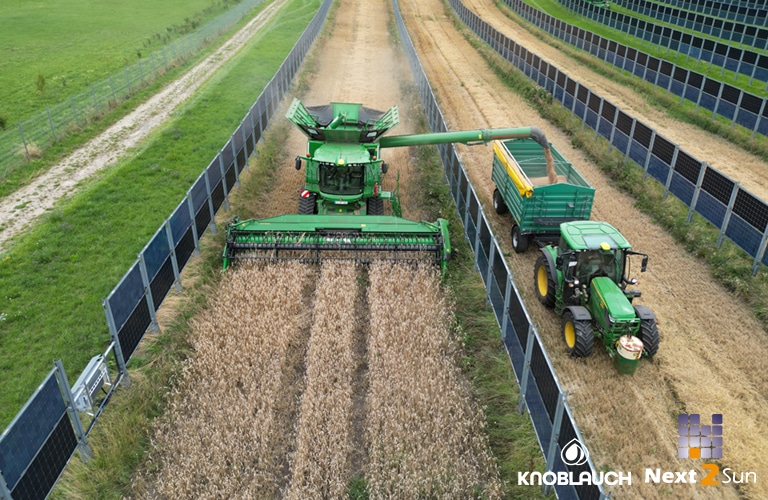
One company leading the way is Next2Sun (Germany), which develops vertical, bifacial photovoltaic systems designed to capture sunlight from both sides, while leaving more space for crops. By orienting panels east–west, they produce power during morning and evening peaks, aligning with grid demand and as a result, maximising revenue generation potential. Their Fence2Sun and Fields2Sun systems illustrate how agrivoltaics can deliver high energy yields with low land use.
Meanwhile, the Dutch start-up H2arvester is providing more flexibility with lightweight solar units that move autonomously across fields, allowing crops and panels to coexist in rotation. The electricity generated can be converted into hydrogen – offering farmers long-duration, on-site energy storage and the possibility of local fuel production.
Together, these innovations show that agricultural solar is now a scaling opportunity. The challenge is not technological, but systemic – renewable energy deployment must complement rather than compete with food production, through policies and planning frameworks that make dual land use practical and attractive for farmers.
Wind: Business models catching up
In contrast to solar, wind energy in agriculture remains a promising but underdeveloped sector. The technology works, but viable, farmer-friendly business models are still taking shape.
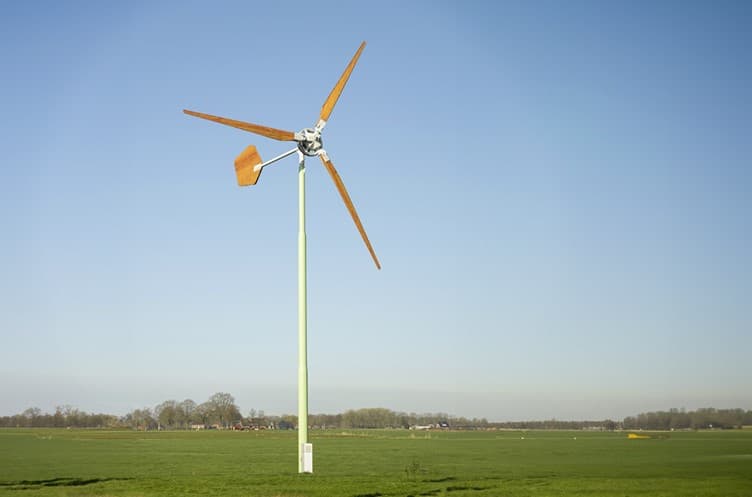
The Dutch company Ecoways is addressing this gap. Its compact turbines, made with locally sourced larch wood and designed to blend naturally into rural landscapes, provide electricity for farms with moderate demand. Ecoways also combines wind, solar, and storage in hybrid systems, helping to balance the variability of each source – when solar generation drops, wind or stored energy can fill the gap – providing farmers with a more reliable and self-sufficient energy supply.
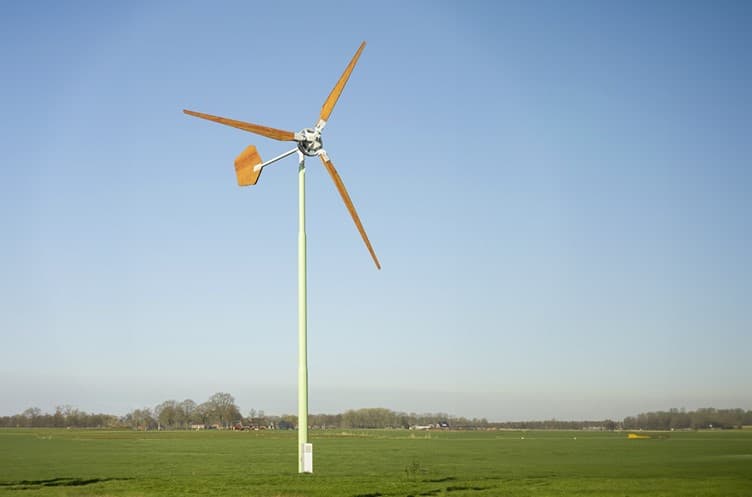
These examples show that technical feasibility isn’t the issue – scaling depends on affordable finance, and viable business models for the integration of small windmills in agricultural land.
Biomass: Circular solutions for smaller farms
Biogas and energy from biomass are already part of the renewable mix in many regions, yet adoption remains uneven – especially among small and medium-sized farms. Here, innovation is shifting from technology to business models that make local, circular systems viable.
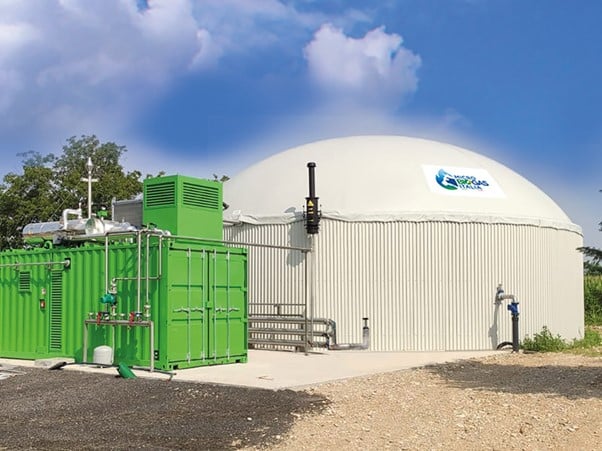
Italian start-up MicroBiogasItalia exemplifies this new generation of distributed biogas solutions. Its small-scale digesters convert animal manure into electricity and heat, helping farms lower emissions while cutting energy bills. With systems starting at just 20 kW, they make biogas accessible to farmers traditionally excluded from large-scale projects.
Beyond energy generation, the real opportunity lies in turning waste into value-added products. Through initiatives such as the Comhar Bia biorefinery network in Ireland, Climate KIC and its partners are promoting cooperative ownership models where farmers process residues into bio-based products, boosting rural economies and sustainability. At the same time, Climate KIC’s Carbon Removal Fund is also looking to invest in biochar production as this carbon-rich by-product of biomass conversion can be marketed and used as a soil enhancer, while also representing a long-term carbon sequestration solution.
Finance and policy: Unlocking scale
Even where technologies are ready, progress depends on the right financial and policy instruments. HarvRESt’s analysis highlights the importance of derisking mechanisms and impact-investing structures that reward environmental outcomes.
But despite these tools, access to finance remains an issue for many farmers. What’s missing is the long-term policy stability and market confidence needed to unlock mainstream financing. Technological maturity isn’t enough – the enabling ecosystem has to evolve alongside it.
HarvRESt’s role: From insight to implementation
The innovations are here, and the ambition exists. What Europe needs now is the framework that turns promising pilots into mainstream practice.
HarvRESt is helping to build that bridge. Through five use cases across Italy, Spain, Denmark, and Norway, the project is testing renewable solutions in real farming contexts, gathering the data needed to understand what works, and developing tools, like the Agricultural Virtual Power Plant and Decision Support System, that give farmers confidence to adopt the right technologies for their land.
And change won’t stop at the farm gate. New awareness-raising campaigns will bring these lessons to farmers, cooperatives, and local authorities, while HarvRESt’s multi-actor approach ensures that researchers, policymakers, and investors shape the transition together.
Scaling renewable energy in agriculture is about connecting the technology already in front of us, and HarvRESt is one of the initiatives helping Europe make that shift.
Join the movement for resilient, regenerative food systems
We’re building a movement for resilient, regenerative food systems by bridging the gap between policy, innovation and practice. From supporting farmers in adopting climate-smart agriculture and renewable-energy solutions, to facilitating dialogue between policymakers and practitioners at the European Carbon Farming Summit, Climate KIC is demonstrating that sustainable agriculture is practical, scalable and economically viable.
Whether you’re a farmer pioneering new practices, a researcher developing innovations, an organisation committed to climate action, or a supporter interested in transforming food systems around the world, we want to hear from you. Visit our #FoodFutures hub to learn how you can partner with us – and join our dedicated Farmers Network to shape the future of agriculture.