
Waste prevention innovation in cities works. With the right conditions.
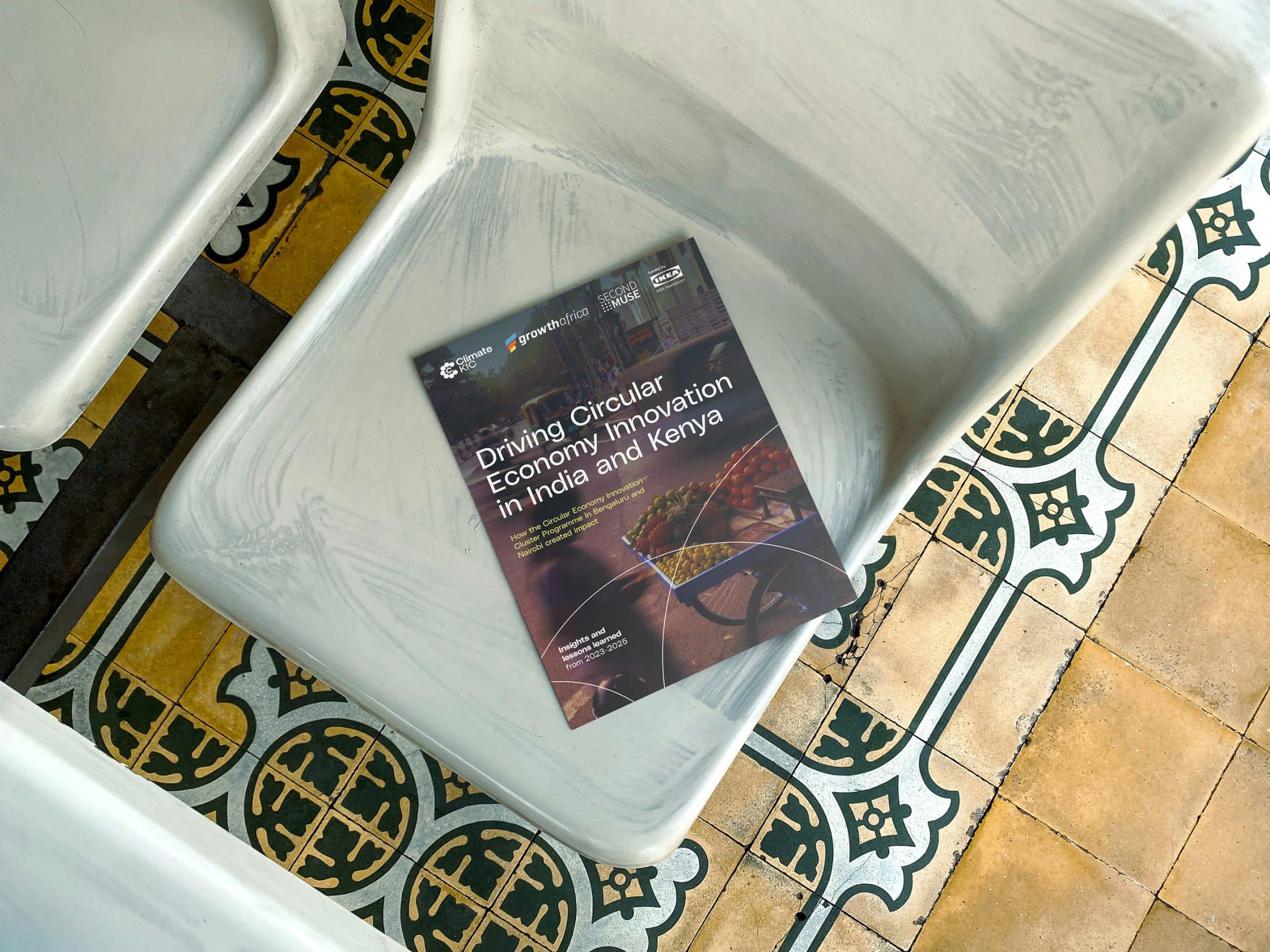
New report from Climate KIC reveals how two megacities built circular economy programmes that reduced waste, supported informal workers, and created lasting systemic change.
Climate KIC, GrowthAfrica, and SecondMuse published findings from the first three years of the Circular Economy Innovation Cluster (CEIC) programme, an initiative in Bengaluru and Nairobi funded by the IKEA Foundation. The report sets out what it takes to shift urban economies away from linear, waste-making-waste-recycling models towards waste prevention in the first place.
Across both cities, the programme supported 52 innovative small business ventures, engaged over 312 stakeholders, facilitated 144 collaborations, and supported more than 1,550 informal waste workers. The enterprises it supported contributed to a combined potential of 218 kt CO₂eq/year of avoided greenhouse gas emissions.

Nyandia Kamawe, Founder of MokoMaya, and one of the participating ventures in the Circular Economy ClimAccelerator in Nairobi – © GrowthAfrica
The challenge
Bengaluru and Nairobi generate over 2 million tonnes of waste annually. Yet most existing support focuses on managing waste after it’s created; recycling, recovery and disposal. Upstream innovation, preventing waste at the design and production stage, remained largely underfunded and overlooked.
“We learned that these cities still see circularity mainly as a problem of recycling and managing waste,” said Carla Alvial Palavicino, Monitoring, Evaluation and Learning Lead on the CEIC project. “We focused instead on the question: ‘How do you stop waste entering the system in the first place?’“
The approach: learning by doing
Rather than impose a predetermined model, the programme was built with learning at its core. Monitoring, Evaluation, and Learning (MEL) was used as a tool for driving real-time adaptation, rather than an exercise conducted after the project was completed.
Using outcome harvesting, social network analysis, and sensemaking sessions, the team continuously adjusted strategy. For example, when sensemaking workshops with Entrepreneurship Support Organisations, incubators, and investors revealed that circular economy ventures require fundamentally different support approaches than traditional start-ups, they co-created the Circular Venture Blueprint with 14 organisations; an open-source guide for building specialised ESO capacity in circular business models, impact measurement, and market dynamics.
“The most valuable asset of this project is the openness of our partners and funders to learn and adapt,” said Carla Alvial Palavicino. “Working in complex transformations, we can’t pretend to know everything from the start. That’s why MEL is essential to create lasting impact.”
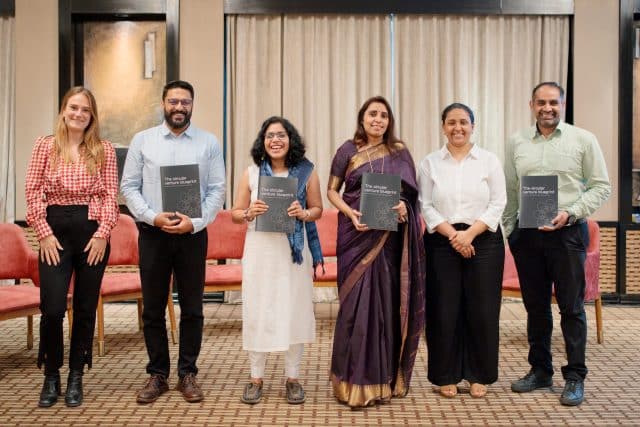
Launch of the Circular Venture Blueprint in Bengaluru, 2025
What really worked
The report identifies three critical success factors:
- Deep market and audience analysis enables successful business pivots towards more productive focus areas for the business. Understanding real market conditions and not assumptions changes everything.
- Catalytic grants paired with hands-on mentorship drive deeper business change. Money alone isn’t enough; ventures need expert guidance, connections, and flexible support.
- Connecting people from industries who rarely meet, stimulates radical collaborations. When start-ups, government officials, investors, informal workers, and ESOs sit together, innovation happens.
For example, iRefill (Bengaluru) initially targeted large consumer brands. Through the programme’s circularity impact assessment, they recognised the market wasn’t ready for their product dispensing systems at that scale. They pivoted to wholesalers and retailers instead, resulting in successful installations across Bengaluru and Indore.
Reflections and learnings
The report is candid about challenges:
- Building trust with investors and policymakers took far longer than initially anticipated
- Public awareness of the circular economy remains a significant barrier, and scaling awareness is difficult
- Even the most promising ventures struggle to access capital that meets their needs—larger, longer-term funding is essential
Why this matters now
As cities worldwide commit to circular economy transitions, this report offers evidence-based proof that it works when the right conditions exist: systems-thinking, continuous learning, social inclusion, adequate funding, and local leadership.