
Where Europe’s climate transition is taking shape: lessons from 52 cities
Across Europe, a quiet shift has been taking place. In 52 cities, local governments, residents, community groups and businesses spent two years testing new ways to cut emissions and new financing models and how to turn abstract climate ambition into a lived, local systemic transformation. Now, their achievements show what reaching climate neutrality can mean in practice.
This article was originally published on the NetZeroCities website, here.
Their collective effort as part of the Pilot Cities Programme under NetZeroCities, led by Climate KIC, has produced tangible results. More than 184,000 citizens took part in pilot activities. Cities trained over 1,400 public officers, created 256 new jobs, launched 40 follow-up projects and recorded an estimated reduction potential of more than 418,000 tonnes of CO₂ with total GHG emissions of 8.67 million addressed in tCO₂eq/year. Energy use fell across multiple pilot activities, adding up to 864 GWh per year in potential savings. These figures only scratch the surface, yet they reflect a strong signal: local climate action is accelerating, and European cities are starting to feel the shift.
How city-led change becomes visible
If you want to understand how climate transformation looks in practice, start in Lahti. On an ordinary weekday morning, an employee at one of the city’s participating organisations chooses a bike instead of a short car journey. Multiply that shift hundreds of times and the cumulative effect becomes visible.
Lahti’s pilot project recorded a reduction of 5,300 tonnes of CO₂ equivalent in its first year and 8,000 tonnes in its second, achieved by tailoring mobility interventions with employers and employees. In total, 636 people actively took part in workplace-based experiments.
This was not simply a mobility project. It became a lesson in governance. By clarifying roles and responsibilities across departments, the city created a clearer pathway for decision-making around sustainable commuting. Private organisations responded once they saw the co-benefits: healthier staff, smoother journeys, financial savings and a stronger sense of shared responsibility. Lahti’s experience shows that behaviour change at city scale often begins inside offices, factories and municipal workplaces, and this shift opens the door to broader breakthroughs across other thematic areas.

Tangible examples from the ground
While each city tested solutions shaped by local realities, several clear thematic areas emerged across the Pilot Cities Programme. These themes cut across geography and governance structures, offering insight into what helps urban transformation gain momentum. They all adopt a systemic approach to tackling their challenges, which is a thread that runs through the Pilots.
Engaging citizens at scale
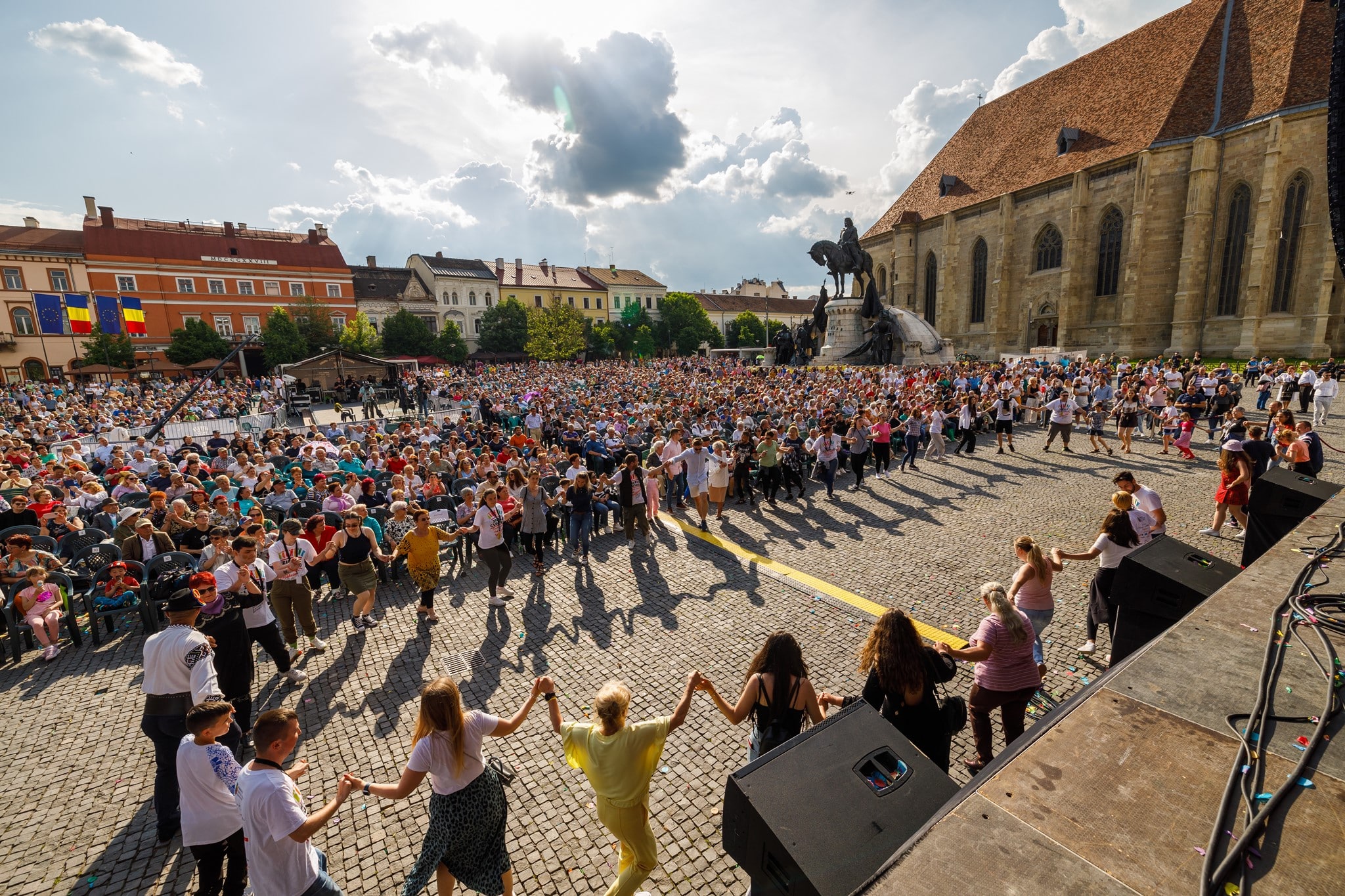
Many cities focused on strengthening the bond between residents and local climate action. Cluj-Napoca mobilised more than 10,000 young people and their families, using school activities, open debates and participatory budgeting to spark conversations about climate responsibility at home. Children became informal ambassadors in their own households, helping shift attitudes towards renovation, energy use and sustainable behaviour.
Guimarães brought citizen participation even further. More than 12,000 residents engaged in community events, mapping exercises and school programmes, while over 130 organisations joined a citywide Climate Pact that evolved into a governance tool. Its Citizens’ Assembly proved so popular that additional sessions were organised to meet demand. Residents used platforms such as Maptionnaire to highlight opportunities and concerns. These insights helped the city root climate action in cultural pride, heritage and local identity, from solar tiles that blend with traditional roofs to energy communities built around neighbourhood narratives.
Transforming buildings and neighbourhoods
Cities also used their pilot activities to rethink how buildings and districts can support the path to climate neutrality. In Malmö, the pilot generated a reduction potential of more than 108 million kWh per year by reshaping how energy is produced and consumed in selected districts. The work relied on close coordination between departments, aligned procurement processes and active involvement from residents. These elements created the basis for energy-neutral neighbourhoods that can be replicated elsewhere in the city.
Galway built its approach around home retrofitting. The city created a Warm Home Hub that became a trusted entry point for residents seeking guidance on energy upgrades. By the end of the pilot, 477 households had engaged with the Hub, 134 home energy assessments were completed and at least 25 homes were already undertaking retrofit measures. The pilot activities also included training for local workers in retrofit skills and introduced governance tools that helped the city coordinate policy, funding and community involvement. These efforts showed how a clear support structure, local expertise and practical advice can make renovation more accessible, particularly for low-income neighbourhoods.
Redesigning governance for long-term change
Across the Pilot Cities Programme, cities discovered that governance is often the hidden engine of climate transformation. Guimarães, Nantes, Uppsala and others used their pilot activities to test new forms of coordination, co-creation and accountability. Some cities rethought renovation workflows, others reshaped mobility governance, and several used their pilots to establish or expand local energy communities.
What these experiments share is a shift towards more open, collaborative and data-driven forms of decision-making. Cities learned to adjust existing structures, identify bottlenecks and adapt their Climate City Contracts to better reflect how change actually unfolds at neighbourhood level.
Other thematic areas tackled are finance and investment, just transition, energy transition, circular construction, behaviour change and more.

A broader movement takes shape
Across all Pilot Cities, a pattern emerged. Cities began to use data more strategically, learned to communicate uncertainty, and to treat failures not as setbacks but as steps forward. The shift from isolated activity to systemic transformation became most visible when cities aligned their pilot work with their wider mission for climate neutrality.
The numbers underline this momentum. More than 30,000 people used digital solutions created through the programme. Municipal buildings saw energy reductions. Waste and mobility projects identified long-term emissions savings. Many cities demonstrated potential for large-scale reductions once solutions are fully deployed beyond the pilot zones.
In total, the pilot activities produced 540 completed deliverables. This is a strong result given the procurement hurdles, institutional fragmentation and organisational transitions many cities faced at the outset. But the real success lies less in the number of deliverables and more in what those deliverables enabled, and the progress cities were able to make because of what was produced. Across cities, deliverables became catalysts: they helped structure engagement, unlock data, strengthen governance processes, inspire new partnerships and embed learning in day-to-day practice.
From pilots to long-term change
The most important outcome of the Pilot Cities Programme goes beyond introducing new technologies, showing instead how cities can reorganise themselves around climate action in a more coordinated way. They learned that climate neutrality cannot be delivered by technical measures alone. It requires new forms of collaboration, transparent governance and the capacity to sustain engagement long after the initial funding ends.
Several cities have already embedded their pilot work into long-term planning. Nantes is extending its governance tools. Guimarães is scaling the Citizen Assemblies and participatory budgeting. Cluj-Napoca is aligning its entire Climate City Contract around insights gained through the pilot. Lahti is sharing its mobility resources with other municipalities. These steps show that the transition does not stop when funding ends. Instead, the work becomes part of the city’s institutional fabric.
A collective shift across Europe
The Pilot Cities Programme was never meant for cities to accomplish the full transition within two years. Its purpose is to help them test new ideas, uncover barriers, challenge existing structures and build momentum for a long-term change.
What emerged from the work on the ground of this first Cohort 1 of participants is a network of cities that now understand their own systems more deeply, have built trust across communities and institutions, and have identified solutions ready to be scaled. They gained confidence, strengthened collaboration and showed that progress often comes from a combination of small, consistent steps paired with a clear long-term vision.
“Across Europe, these Pilot Cities show that the deep transition is already underway. They demonstrate how climate neutrality can be built street by street, neighbourhood by neighbourhood, and through decisions made by residents, public servants, companies and other city actors. The next phase will bring its own challenges, but cities now have a stronger sense of direction, deeper partnerships and the evidence that a different future is not just necessary but achievable,” said Joanna Kiernicka-Allavena, Deputy Head of Cities Team.
As part of the Pilot Cities Programme under NetZeroCities, participating cities received funding and expertise to test and implement described systemic approaches to rapid decarbonisation. Meanwhile, two more cohorts of cities are developing their solutions and taking similar steps to achieve climate neutrality through the programme. Stay tuned for more impact from cities in action!