
From boardrooms to communities: rethinking climate adaptation for real impact
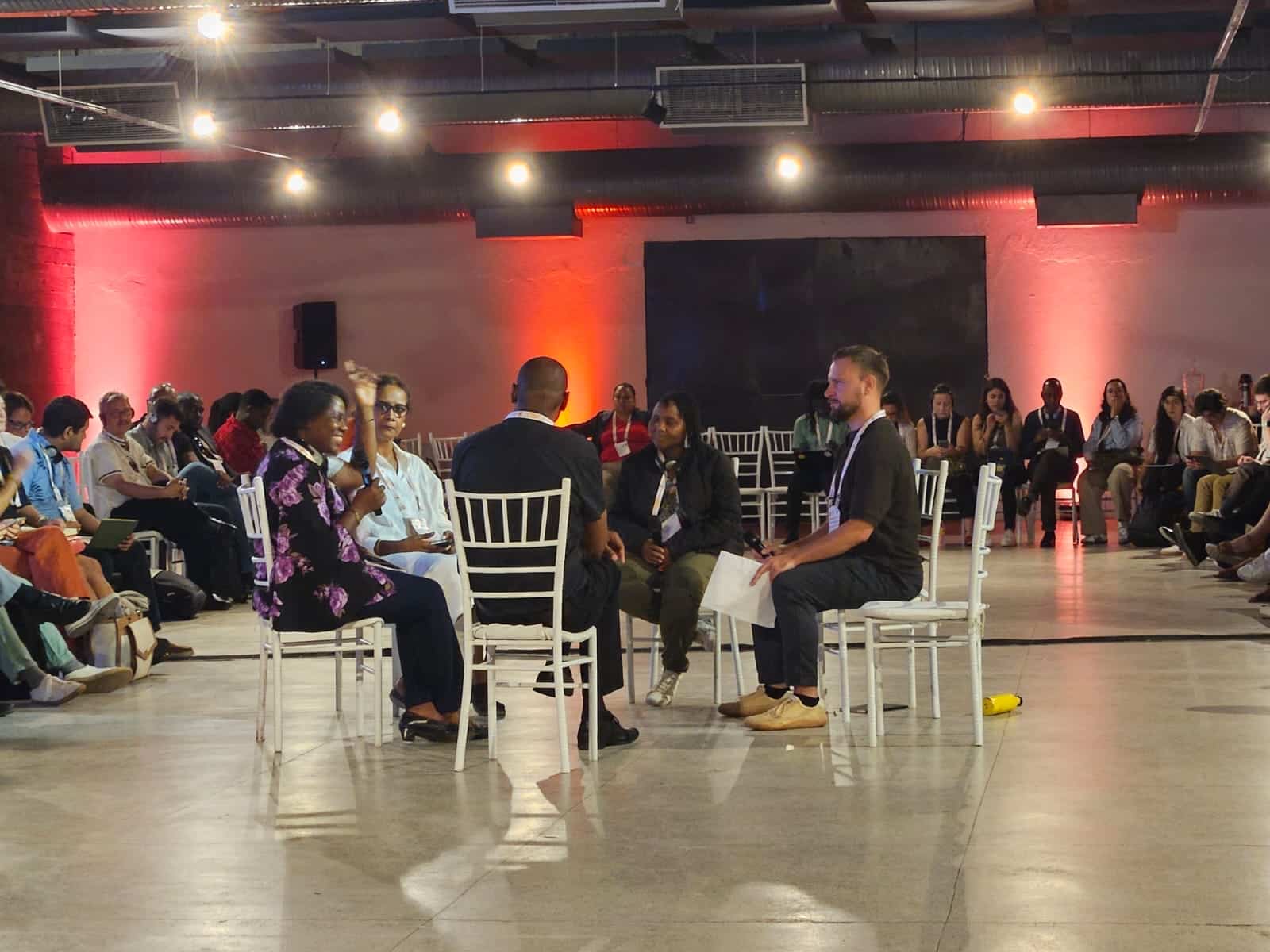
How do we accelerate the adoption of effective adaptation strategies and practices? In community settings, there is no shortage of clarity or urgency. Events like Climate Week NYC and the international conferences on Community-Based Adaptation (CBA) have made it clear: we know what’s needed. Yet, adaptation continues to lag far behind mitigation in terms of funding, visibility, and mainstream uptake.
Here are six hard truths that continue to surface across adaptation gatherings:
- Many problem-solvers don’t realise adaptation businesses are simply solutions that help communities prepare for, cope with, and recover from climate-related threats.
- The space is underfunded, receiving less than 10% of global climate investments. This is a misalignment with the rising and uneven burden of climate impacts already experienced across the world.
- Private sector involvement is essential, not only because the cost of inaction is high, but also because there may be a new market for green solutions emerging.
- Climate justice requires gender justice. Women and girls, especially those from marginalised communities, are disproportionately impacted and must have space for leadership and participation, within an intersectional approach that considers all identities.
- Development programmes offered by international organisations should be more flexible and provide longer-term support beyond one- or two-year agendas.
- Local actors are driving innovation, but without sufficient, direct, or predictable support. Their knowledge and leadership are crucial, yet funding still flows primarily through international intermediaries, weakening impact on the ground.
(Learn more about the key messages developed at the 19th International Conference on Community-based Adaptation)
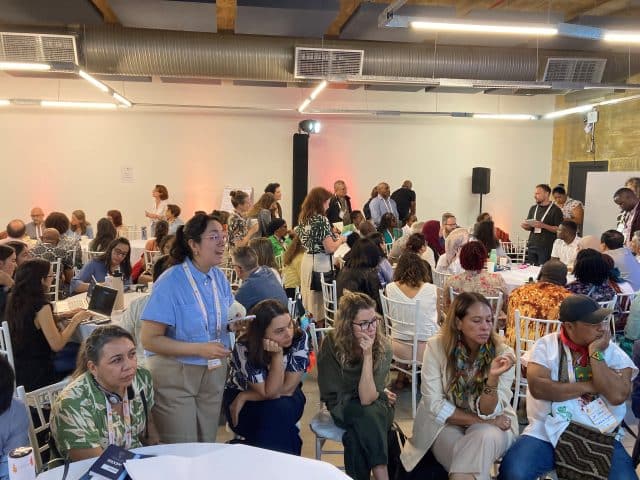
Why isn’t this moving faster?
Despite a growing sense of clarity within the adaptation space, the pace of change remains slow. Adaptation is still treated as incremental, often framed through a technical, short-term lens. What we need is transformational adaptation: a shift that not only improves resilience to specific shocks, but also restructures power, reimagines development pathways, and centres local knowledge and agency.
There remains a deep disconnect between the communities living with climate risk, the organisations working to support them, and the institutions with the power to finance and enable large-scale change. Private equity funds, insurers, regional development banks, business associations, and large public-private investors are often less visible or actively engaged in discussions around locally led adaptation. This limited involvement can hold back momentum. Without a shared understanding and joint action from both local innovators and global financial and business actors, we cannot scale what works
Building bridges with the Climate Adaptation Innovation and Learning project
The Climate Adaptation Innovation Learning project, supported by the Global Environment Facility (GEF), seeks to address these gaps. We aim to bring these actors together, spark dialogue, and build a knowledge platform that enables all stakeholders to learn and take action. Through the co-creation of three Communities of Practice (CoPs), focused on Small and Medium-sized Enterprise (SMEs) incubation and acceleration, impact measurement, and investment funds, we aim to unlock insights and improve access for private sector engagement in climate adaptation.
Climate KIC drives the Community of Practice for the incubation and acceleration of SMEs, bringing together climate entrepreneurship support organisations and start-ups to listen, reflect, and identify how the system can better support their development and help them secure funding. In 2025, we met online to discuss designing support programmes, building effective collaborations to attract investment, and using impact measurement to develop evidence-based investment cases. Recent in-person meetings, such as CBA19 in Recife, Brazil, have also been instrumental in helping us understand the specific needs of this group, including:
- Access to patient and predictable funding committed over longer timeframes and disbursed reliably, enabling local organisations to plan strategically.
- Flexible support programmes and funding that adapt to changing climate risks and local contexts, ensuring solutions are co-created with local organisations rather than imposed through rigid, pre-set plans.
- Direct financing mechanisms that demonstrate genuine trust in local communities, reducing reliance on intermediaries and translating talk of trust into concrete funding practices.
- Building institutional and technical capacities so local organisations can independently manage funding, comply with due diligence, and scale impact.
- Recognition of diverse local knowledge and governance systems, as many of these organisations are Indigenous communities whose cultural practices provide deep understanding of local contexts.
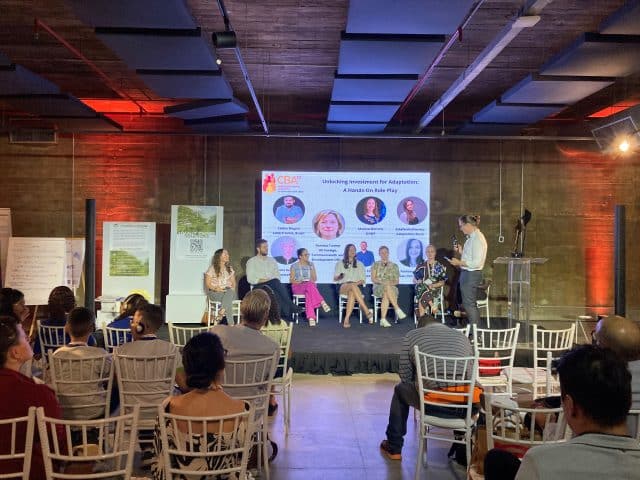
Role-play session at CBA19 in Recife, Brazil
UNDP, Adaptation Fund, Climate KIC, and Latimpacto take on the challenge of unlocking investment for adaptation. Through live pitching and feedback, participants expose key gaps between locally led solutions and investor expectations.
What stands out from all these needs is a clear call for a localised approach to climate adaptation. Many global support systems still operate in a top-down way, with multilateral organisations and funders focused on distributing resources widely, scaling impact, and leveraging intermediaries to reach target audiences. While these objectives are important, they often fall short in climate adaptation, as climate risks vary by region and lack a one-size-fits-all solution.
A local approach ensures that those who best understand local challenges, and how to address them, can lead the response. This is critical for achieving meaningful impact where it is most needed. Often, funds channelled through multiple intermediaries could better serve vulnerable communities if directed locally. The same challenge applies to mobilising private finance, where the focus frequently remains on measurable indicators like return on investment (ROI), rather than on the sustainability of people and ecosystems.
Learn more about the eight principles for Locally Led Adaptation developed by the Global Commission on Adaptation after extensive consultations.
“Communities are yelling – trust us! The current mechanisms signal mistrust. Even though trust is discussed frequently in conferences and boardrooms, it needs to be translated into concrete actions and new ways of collaborating.” Tom Pruunsild, Learning Facilitator Lead, Climate KIC.
Closing the adaptation gap
In terms of engaging the private sector, what does this mean in practice? Is it a call and an opportunity for local private investment funds to play a greater role, exploring region-specific trade-offs and identifying viable business cases? Or does it point towards blended models where private and public actors collaborate, with clearly defined benefits for all parties involved?
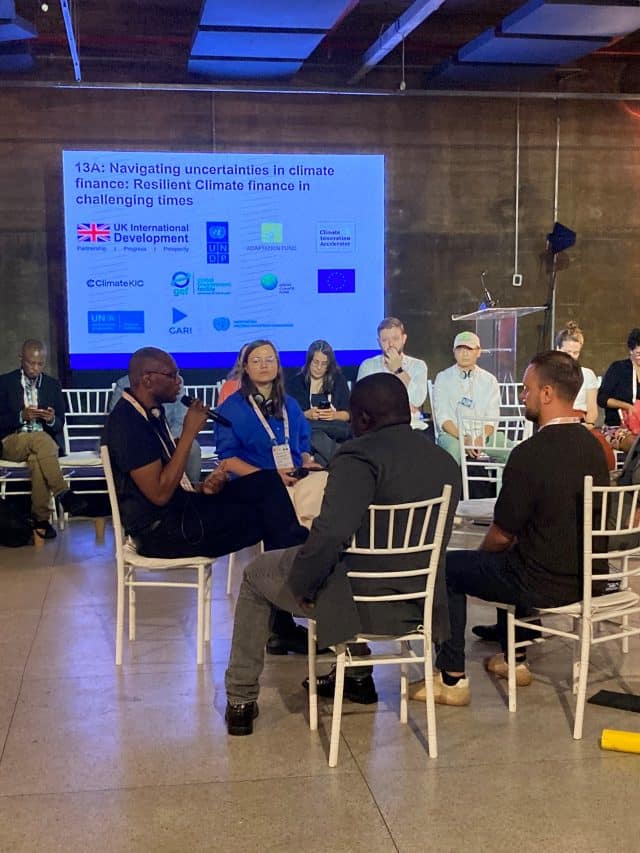
Fishbowl conversation at CBA19 in Recife, Brazil
Participants tackling the uncertainties of climate finance – exchanging ideas on overcoming funding barriers, strengthening locally led adaptation, and building resilient, inclusive financing models.
These are exactly the kinds of questions we aim to explore further. If you’re involved in supporting climate adaptation and resilience, we invite you to join our upcoming initiative. Between September and December 2025, we’ll bring together 30 practitioners in a four-part virtual workshop series to share insights, rethink current approaches, and co-create locally grounded, effective support models for adaptation ventures in the Global South. Learn more and apply here.
Developing a common understanding of climate adaptation remains a significant gap. A better-informed adaptation landscape will foster stronger networks, greater access to opportunities, and more effective knowledge sharing. If you are an entrepreneurship support organisation interested in expanding your work in climate adaptation, we invite you to join our community of practice focused on incubation and acceleration.
Climate KIC works with communities, regions, and partners to build climate-resilient societies and tackle the root causes of climate breakdown. Through systemic innovation and collaboration, we support local solutions that enhance the resilience of people, ecosystems and economies to the growing impacts of climate change. Our #AdaptationInAction series highlights stories from our global adaptation portfolio, real examples of resilience in action. This is one of them.
Subscribe to our newsletter and follow us on LinkedIn to stay up to date with Climate KIC’s adaptation initiatives.