
Fundraising as a bridge: Reflections from the International Fundraising Congress
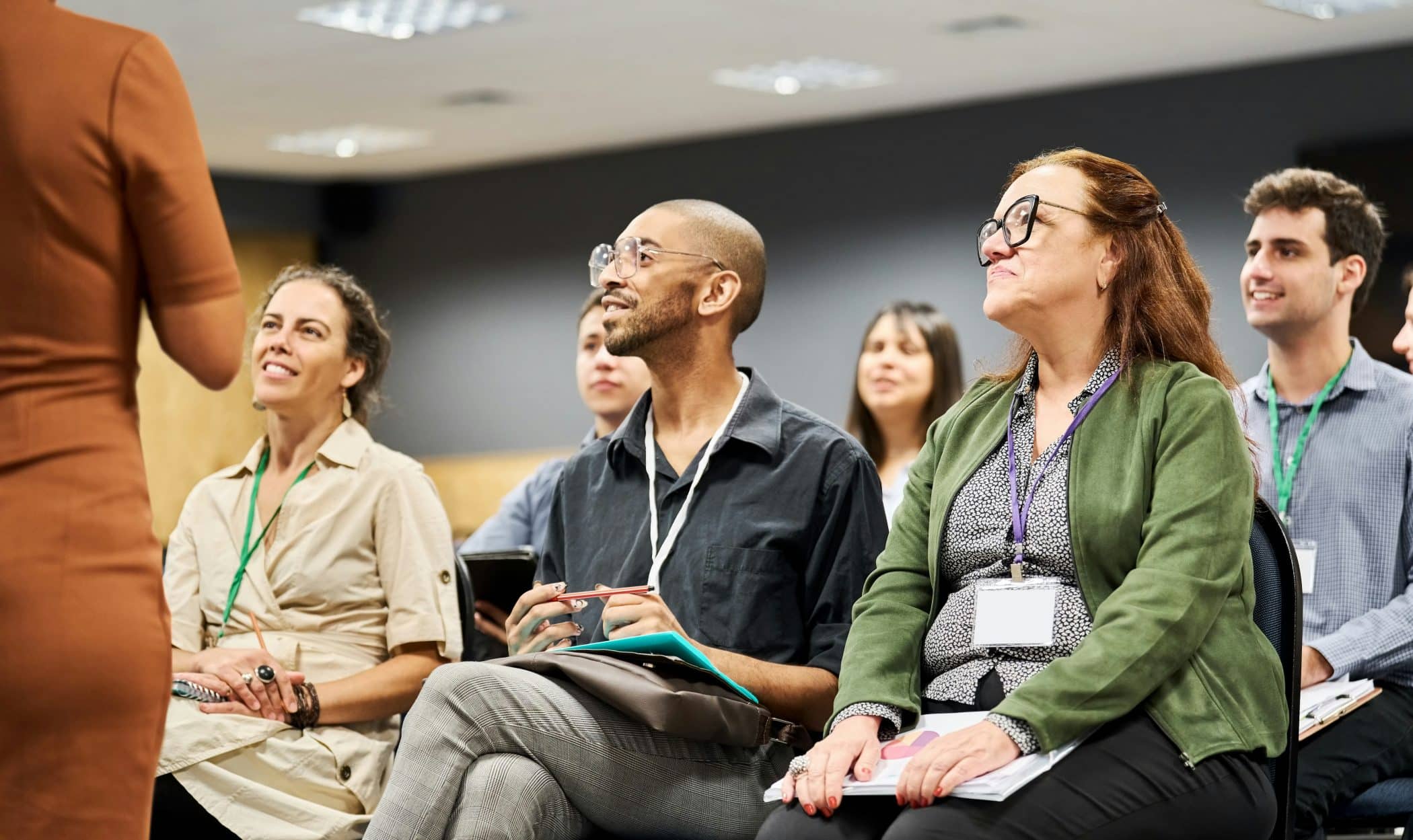
At this year’s International Fundraising Congress (IFC), the word bridge came up more than once. Not as a metaphor for money but for connection. Because if there was one feeling that stayed with us, it was this: the space between NGOs and donors is still too wide.
Melody Song, Climate KIC’s Head of Philanthropy, put it plainly: “Many NGOs talk about connection, but we’re still not connecting.”
Conversations too often end at compliance reports and performance metrics, when what’s really needed are relationships built on trust, curiosity and shared learning. It’s in that space (between transaction and transformation) that fundraising can become something much more powerful: a bridge that helps us meet each other differently.
Unlearning the old story
Melody spoke about the subtle but deeply rooted biases that still shape the sector. For decades, the story has been written as North gives, South receives. That framing (whether explicit or not) defines how budgets are allocated, how impact is measured and even how meetings are held. The Global North often sets the agenda; the Global South is expected to deliver on it. Yet, the people most affected by climate change are already leading some of the most innovative, locally grounded solutions. The real challenge isn’t a lack of capability… it’s a lack of equal partnership.
It’s time to stop treating fundraising as charity. It can, and should, be a shared act of imagination where we talk about the kind of world we want to build together.
A changing landscape of giving
The fundraising data shared at IFC revealed both turbulence and transformation.
- Global private-sector fundraising growth flattened in 2024, rising only 1.4% year-on-year, even as wealth grew by 4 % globally (UBS Global Wealth Report 2025).
- Trust in NGOs is eroding. In 78 % of countries, public trust in NGOs is stable or falling (Edelman Trust Barometer 2025).
- Donor participation is shrinking. Fewer people than ever gave to charity in the UK in 2024 (CAF UK Giving Report 2025).
- Growth is concentrated in a few regions. The USA, Germany, Switzerland and the UK now account for 68 % of total private-sector income — while acquisition of new donors outside China has fallen below 2020 levels.
- And yet, Asia is rising. Markets like China, India, Malaysia and Indonesia show steady growth and a surge in local high-net-worth giving. Major giving grew 13.6 % globally (2020–2024), with Asia contributing an increasing share.
The takeaway is sobering but hopeful: generosity isn’t disappearing… it’s transforming. Power and influence are moving. The question is whether the sector can move with them.
Systems thinking for impact
Against this backdrop, Melody Song and Solla Zophoniasdóttir, Climate KIC’s Learning Director, hosted a session at IFC titled “Systems Thinking for Impact.” It wasn’t a showcase of best practices; it was an invitation to pause, zoom out, and examine the mental models beneath how we fund change. Melody noticed that most people in the room hadn’t yet worked in a systems-thinking way but there was clear energy and curiosity.
Solveig summed it up: “We saw an appetite for deeper, more complex narratives. We just need to make sure we’re equipped to talk together. There’s a call to not oversimplify but not overcomplicate either. That’s the tension.”
One participant later shared that the session shifted how they listened for the rest of the conference. They stopped asking “How do we fund this project?” and began asking “What system are we part of and what does it need from us?”
That’s the quiet power of systems thinking: it humbles us. It reminds us that we’re each only a small piece of something much larger.
The human side of power
Melody recalled being moved by a conversation about “calling in” rather than “calling out.” In a sector often quick to critique, she reflected on how change depends on meeting people where they are… even when they don’t yet speak the same language of equity or systems change. Power doesn’t only live in who holds the money. It lives in who defines what counts as impact, whose knowledge is seen as legitimate and whose stories are heard.
When funders and practitioners sit in separate rooms, those divides deepen. We learn together and walls start to soften.
Looking ahead
The global fundraising landscape is shifting. NGOs are under immense pressure to sustain income in a crowded, risk-averse space. Public funding is expected to drop 28 % between 2023 and 2026 (Human Rights Funders Network), and trust in institutions is waning. But this moment also holds possibility. It’s a chance to rebuild relationships around listening, shared purpose and transparency.
Fundraising, at its best, isn’t just about resources. It’s about relationships. It’s how we cross divides between north and south, between disciplines and what we know and what we still need to learn. There’s a long road ahead, but it’s one we can walk together and make big impacts. If we treat fundraising not as extraction but as exchange. Not as competition but as co-creation.
Learning to lead differently
At Climate KIC, this spirit lives on through the Climate KIC Academy…a space where funders, innovators and policymakers learn to think and act systemically. Through its programmes, the Academy helps people build the soft skills and shared language that make collaboration possible. Because in the end, building bridges isn’t just the work of fundraising. It’s the work of transformation itself.
Visit the Climate KIC Academy to learn more.