
In Valencia, communities benefit from the city’s climate ambitions
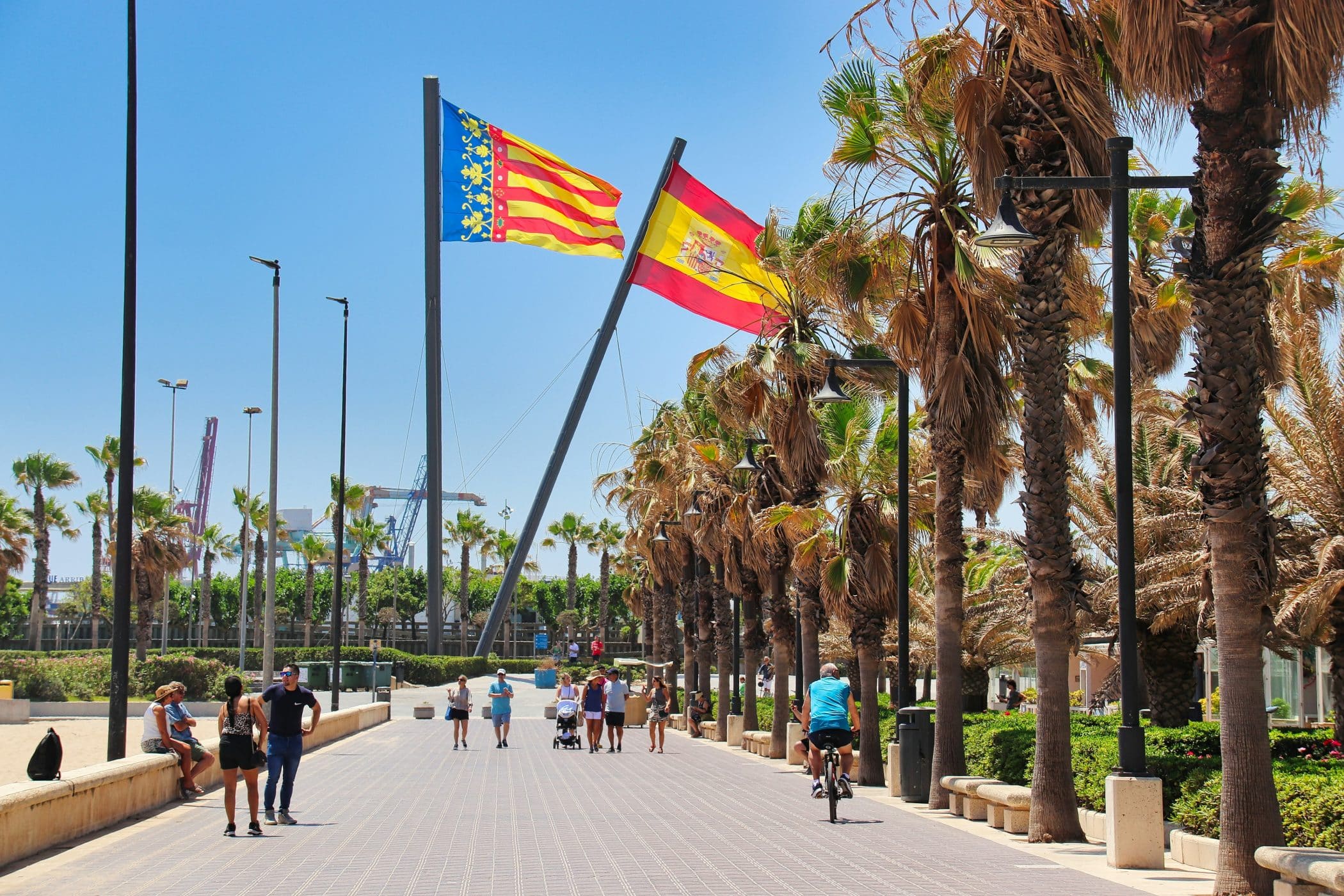
Spain’s latest heatwave in the summer of 2025, with temperatures pushing past 40°C, has directly impacted communities through soaring electricity costs, unbearable urban heat, and vulnerable residents struggling to stay cool. This is pushing local authorities to find urgent solutions that work for residents, not just emissions targets. Valencia has emerged as a frontrunner in this community-first approach to climate action.
A few years ago, Valencia was one of the first 18 Spanish cities to join the ambitious new climate platform citiES 2030, a unique national collaboration network launched by Climate KIC and the Technical University of Madrid.

Read Climate KIC stories on the Spanish national platform
and how Spanish cities are working together to learn more.
The city already earned the EU’s coveted Mission Label for climate neutrality back in 2023 and has become a model for how urban climate action can simultaneously tackle energy poverty, social inequality, and carbon emissions. It is doing so by turning cemeteries into power plants and neighbourhood squares into climate education hubs, among other initiatives. The city’s success within Spain’s programme proves that the path to carbon neutrality by 2030 must incorporate creative community engagement, and not just technology.
But what does this transformation look like on the ground? And how exactly does a city become carbon-neutral while improving daily life for its residents? To find out, we looked at Valencia’s pioneering approach through the municipal foundation Clima I Energia – a unique agency that has become a model for how a Spanish city can turn climate ambition into tangible community benefits.
Climate education as a pillar
Clima I Energia has dedicated itself to spreading climate change-related information and advancing the energy transition – and one of its main tools is the so-called “Oficina de l’Energia”. The citizen-focused facility, a kind of ‘one-stop shop’ for energy, centres on education and practical advice – a hands-on, life-based approach that defines its work.
For example, the office provides valuable information for Valencians who intend to install photovoltaic (PV) panels on their rooftops:
“There’s a lack of transparency on this topic,” states Alejandro Gómez, Coordinator of European Projects and Urban Strategies at Clima I Energia. “There are a lot of public subsidies you can ask for. That’s one of the things we explain most.”
But often, people interested in their own solar energy supply face even more basic obstacles.
“In Valencia, 98% of people live in apartments, so people don’t have their own roof. To install a PV panel, they need to agree with their neighbours. You can do that of course. Actually, for the past three or four years you’ve only needed one third of residents in a building to agree in order to install a collective PV panel – but very few people know this”, explains Gómez.
This demonstrates how ecological issues are inseparably linked to socioeconomic questions – an interconnection the Oficina always takes into account: A large part of its daily work consists of offering practical advice on saving energy and money. This ranges from tips on how to fix your windows to improve insulation, to helping residents better understand their energy bills – services so diverse that they can only be delivered by a multidisciplinary team.
“There are engineers, architects, social employees and environmental educators that work in these offices and answer any questions that people may have regarding energy bills,” explains Gómez. This issue proved particularly important a few years ago. Shortly after the Oficina opened in 2019, Spain was hit hard by an energy crisis, and many Valencians struggled to pay their bills.
Money is also an ongoing concern for Clima I Energia itself. Although it is fully financed by the municipality, funding remains a constant challenge. Valencia becoming part of the citiES intiative has helped a lot: the platform has, for example, facilitated access to other European programmes such as the project WellBased, an initiative that explores how energy poverty is interconnected to mental and physical health.
Cemetery solar powers local homes
The social perspective is also central to other climate -related initiatives in Valencia. One example is R.I.P. (“Requiem in Power”) – an innovative clean-energy project where PV panels have been installed across the city’s five cemeteries. Together, these large installations generate almost three megawatts of electricity. What makes the project particularly special is that 25 % of the energy provided by R.I.P. is supplied to low-income households in the nearby neighbourhoods.
Surprisingly, the idea of building energy infrastructure on cemetery grounds stirred little controversy. Backed by the region’s highest clerical authority, the project quickly gained broad social acceptance – a clear example of how important proactive communication and stakeholder involvment are when introducing climate-related actions.
People at the center of the transition
An active people-centred approach also defines the work of Clima I Energia, which places great emphasis on being present in communities.
“We go out of the offices”, as Gómez puts it. “We do a lot of activities with associations, neighbours, schools, high schools, open universities – with many different groups in the neighbourhoods.”
The Oficina now operates from three permanent sites in different Valencian districts. There is also an electric van that serves as a mobile office, visiting public squares across the city to inform residents. An extra benefit of these facilities is that, on hot days, the office buildings are used as climate shelters, offering refuge from the urban heat-island effects that are becoming an increasing problem in Spanish cities.
But it is not only the city and its institutions acting to tackle climate change. Valencia’s progress towards carbon neutrality would be unthinkable without the commitment of its residents. While climate change can often leave people feeling helpless, local initiatives show how effective personal initiatives can be.
One example is the socialised PV plant Las Naves Brillen, located in the Valencian district of Poblats Marítims. Solar panels, mostly funded by private citizens, were installed on the rooftops of a public building complex in 2022. The Las Naves project was not only a powerful response to the energy crisis but also a way of returning energy production to the local residents.
A similar story comes from the community of Catarroja, in the wider Valencia region. When the town was badly hit by devastating flooding in 2024 – a disaster partly attributed to of urban mismanagement driven by speculative interests – residents turned their frustration into action. They founded a citizen-led urban committee that is now actively involved in redesigning and renovating buildings to make them flood-resilient.
Scaling climate success beyond Valencia
While Valencia is well advanced on its pathway to carbon neutrality, other parts of Spain are only just beginning their journey. Supporting these cities strategically, in every possible way, is the main focus of the current and future work of the citiES 2030 initiative.
“If you really want to transform a city and reduce emissions so dramatically, you have to have everyone involved,” stresses Julio Lumbreras, Associate Professor and Director at the Universidad Politécnica de Madrid, which launched the citiES 2030 platform together with Climate KIC. “Unless you engage all the stakeholders, nothing will happen.”
That means private companies, academic institutions, and civil society organisations all need to be connected and committed to the cause.
In Vitoria-Gasteiz and Zaragoza, two other Spanish cities participating in the initiative, this collaborative approach has already produced tangible results. A major example involves the French car tyre manufacturer Michelin, a key employer in both cities, which has agreed to reduce its production-related emissions to zero by 2030 – twenty years ahead of the company’s global target.
Another important aspect of the platform’s work is providing a safe space multi-city collaborations across Spain. Such collaborations often hold the key to success when it comes to practical implementation.
“We have, for example, a retrofitting multi-city project involving seven Spanish cities, focused on accelerating the retrofitting of buildings,” explains María García Rodríguez, Strategic Pathfinder at Climate KIC. “We have another project on deploying electric vehicle chargers, developed with the European Investment Bank. We’re mapping the cities and identifying barriers to see how we can scale up deployment in a major way.”
Valencia’s experience shows that climate action works best when it directly improves people’s daily lives. Through the Oficina de l’Energia, thousands of residents now better understand their energy bills, access solar subsidies, gain benefits from a community-owned power plant, and navigate neighbour agreements for rooftop panels.
The R.I.P. cemetery project delivers 750 kilowatts of free electricity to low-income households while generating nearly three megawatts in total. During heatwaves like the one Southern Europe has just endured last summer, the Oficina’s buildings serve as cooling shelters, protecting vulnerable residents from dangerous temperatures.
These tangible benefits – lower energy costs, clearer information, emergency cooling, and direct power support – demonstrate that the path to carbon neutrality does not require communities to sacrifice comfort or financial stability. Instead, Valencia shows other Spanish cities that climate action can reduce emissions and energy poverty simultaneously, one neighbourhood, one household, one energy bill at a time.
As the citiES 2030 platform scales up this model across Spain’s 18 participating cities, millions more residents will discover that going carbon-neutral means living better – not just cleaner.
To learn more about the platform implementation and progressing work, read our previous articles: here and here).