From satellites to battery recycling: Meet the innovators looking for climate solutions in tech
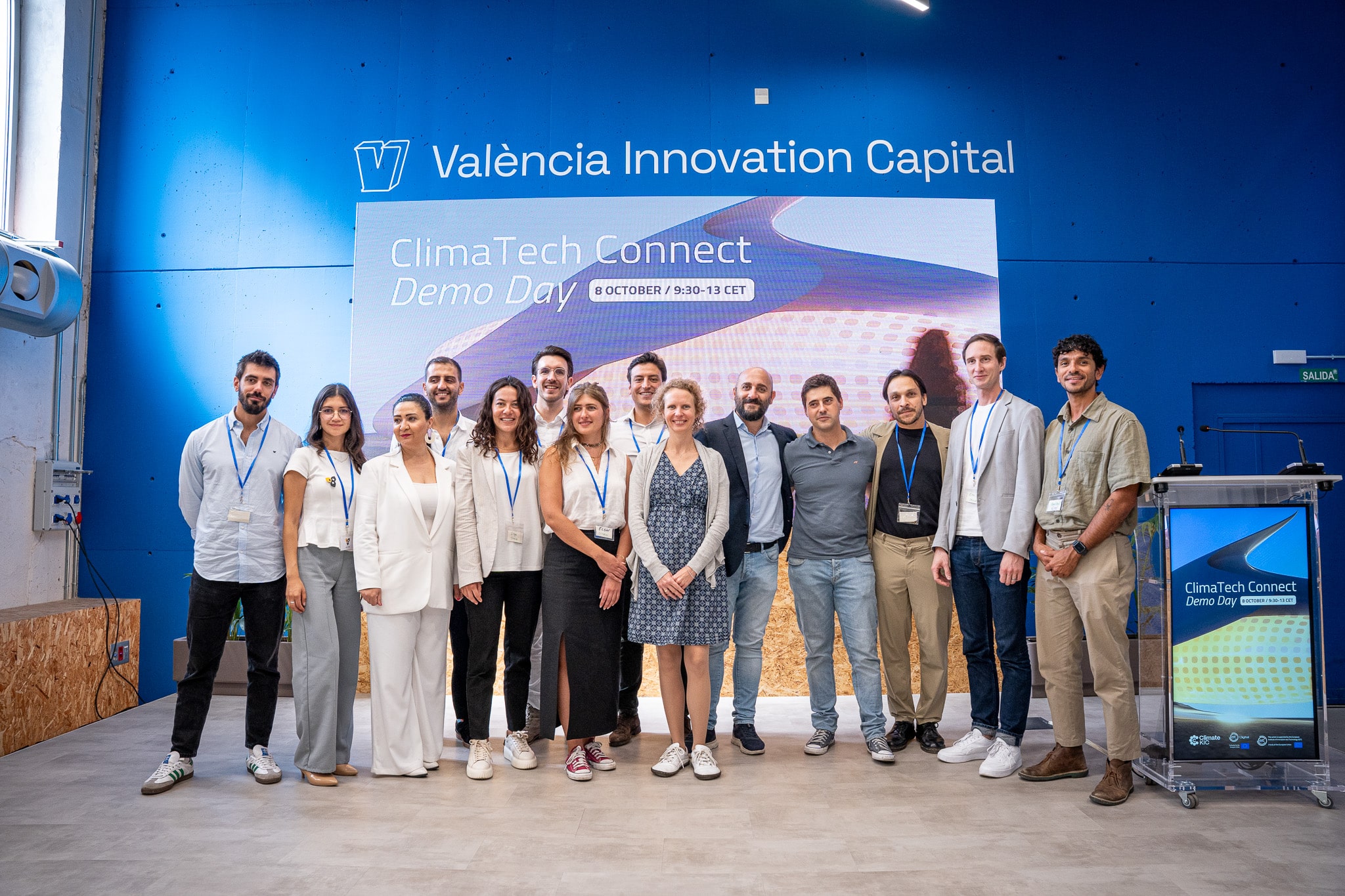
ClimaTech Connect supports start-ups across Europe with networking, mentoring, training opportunities and finance.
Data centres increasingly run the global economy. These vast warehouses, filled with computer servers, allow you to stream your favourite TV show or login to your online banking from anywhere in the world.
All this activity takes a tremendous amount of power: 1.5 per cent of the world’s total electricity consumption, to be exact. In some countries that figure can be even higher. In Ireland, for example, where Apple, Google, Meta, and Microsoft all have their European headquarters, 20 per cent of electricity demand comes from data centres.
Those figures are expected to rise. The International Energy Agency projects that energy demand from data centres will double by 2030, driven by the growth of AI.
Meeting this demand at a time when emissions from electricity generation must rapidly decline is a key challenge for the future.
Federico Ruilova is one European start-up founder looking to meet that challenge. He is the CEO of GreenPow, helping businesses be more sensible in the way they process and store data.
“We offer a smart platform that cuts the carbon cost of cloud computing and also saves costs for organisations that run on the cloud,” he explains.
GreenPow uses AI and data analysis to help clients deploy services in areas with an abundance of green, renewable energy. They also help companies use load scheduling and load shifting to reduce costs and lessen pressure on the grid. Imagine it like running your washing machine at night to keep your energy bills low, but on a grander scale.
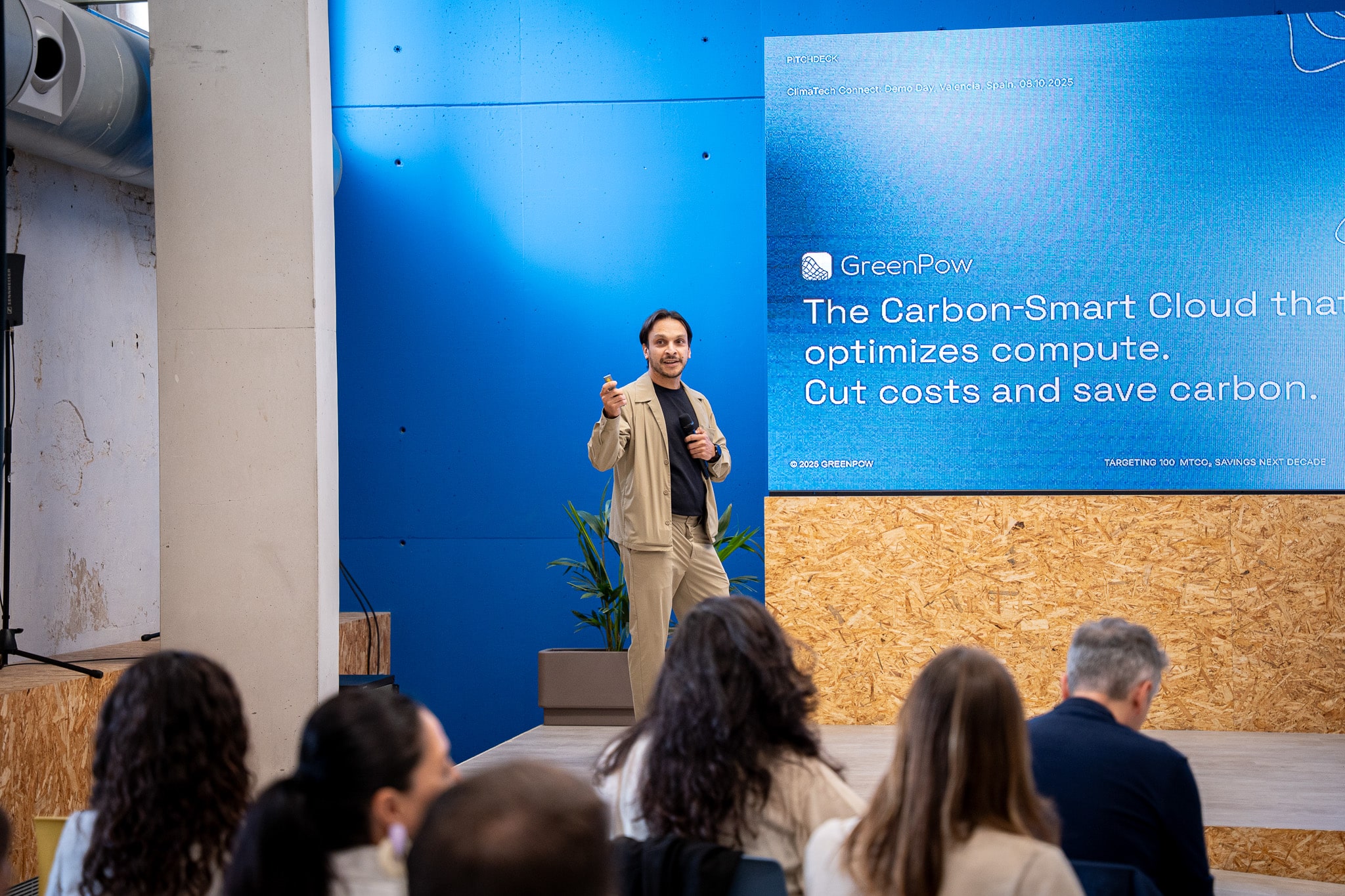
GreenPow’s Founder pitches at the Demo Day held in October
The Estonia-based start-up is one of four winners of ClimaTech Connect. The programme, funded by the European Institute of Innovation and Technology (EIT), offers networking, mentoring, and training opportunities to early-stage start-ups with digital solutions for problems posed by climate change. In total, it has supported 35 early-stage innovators across the EU, with four teams receiving grants of up to €25,000.
ASTRO kW, another grant recipient, is using AI to help organisations ranging from agriculture companies to real estate firms better manage their energy supply.
“[Companies are] wasting money and energy because they don’t have the right tools to understand their consumption and they don’t know how to optimise it either,” says Miguel Ramírez, chief creative officer at ASTRO. “We make energy management effortless, reducing costs and emissions while empowering our clients to be more efficient and sustainable every day.”
Another grant winner, Italy-based Latitudo 40, uses satellite image analysis to help urban planners, architects, governments, and other organisations to make decisions on where to build new infrastructure. They monitor coastlines for erosion and sea-level rise, help track tree coverage, and demonstrate how city parks can be used to cool neighbourhoods.
Francesco Matto, business development manager at the company, says the ClimaTech Connect programme “was made for us”.
He adds: “For the team, the value of this programme is to create a network with other companies… if you work alone, you can go so far. But if you work together, you can go so much further.”
For Federico Ruilova from GreenPow, the programme has been valuable too. “We have a mission to remove 100 million tonnes of carbon in the next ten years and mixing the components of climate entrepreneurship, innovation, and raising funds makes it very valuable for us.”
While most of the grant-winners make use of emerging AI technology, the last of the four recipients has a simpler pitch: battery recycling.
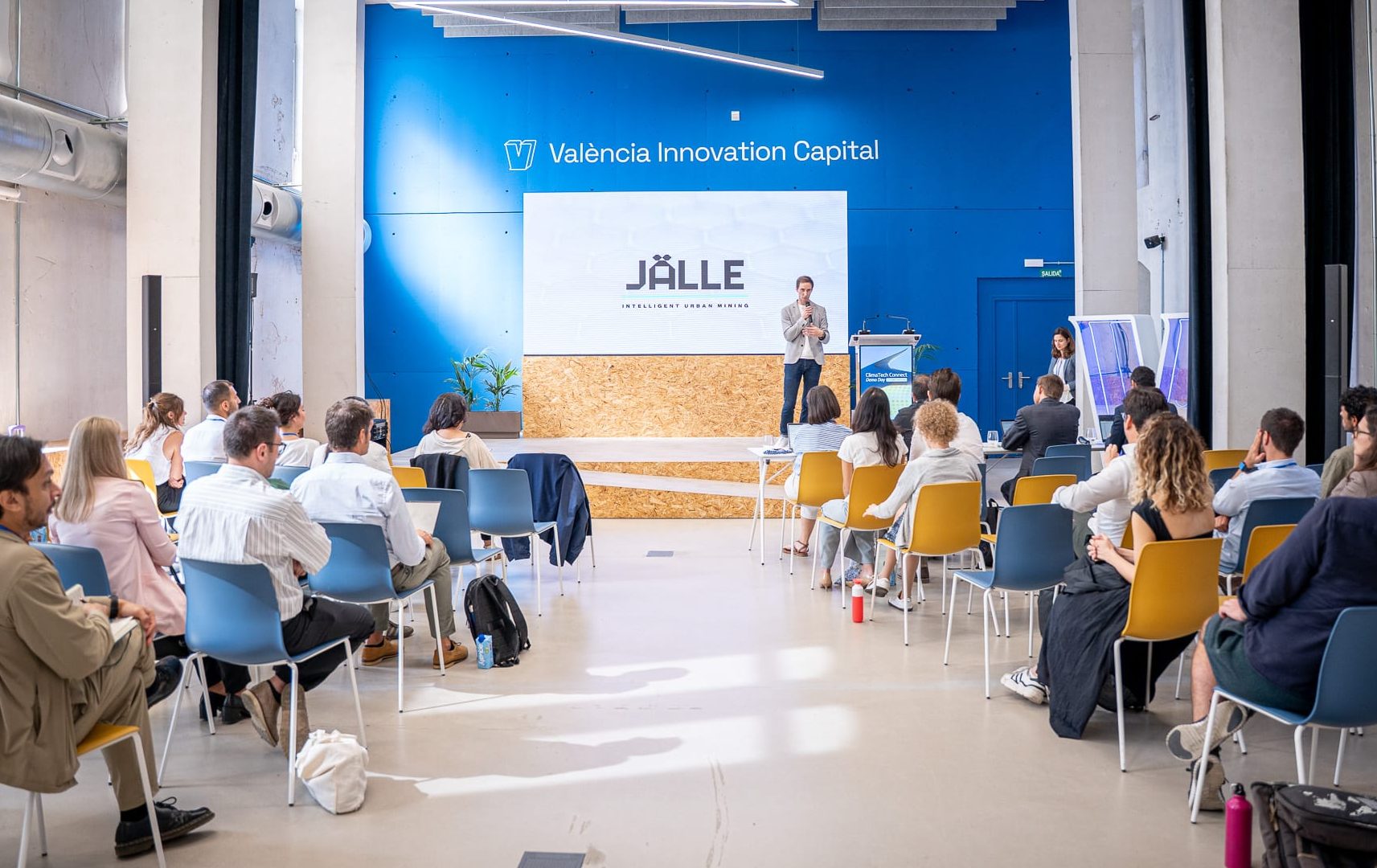
Jälle Technologies Founder on stage at the Demo Day in Valencia.
Jälle Technologies, also in Estonia, is building a circular economy for batteries with its advanced recycling technologies.
“We are upcycling the battery recyclers’ graphite waste,” says Erki Ani, CEO. Instead of letting that waste be incinerated or landfilled, Jälle Technologies takes graphite waste and turns it into graphene-like materials. Graphene is a superconductive and extremely thin material that can be used in biomedical technology, electronics, and energy.
The ClimaTech Connect programme has supported Jälle with workshops, as well as connecting the organisation to mentors.
For Ani, the programme has helped his team “meet with common peers that share the vision of what actually is needed to be done to make a dent in the universe.”
ClimaTech Connect was designed and delivered by two of EIT’s founding Knowledge and Innovation Communities—Climate KIC and 28DIGITAL—with a focus on attracting women-led founders and those based in European countries with lower innovation scores. It is one of hundreds of initiatives we lead, helping to drive the growth of Europe’s climate-tech ecosystem.
For more information about this work, visit our climate entrepreneurship page.