
NetZeroCities: Sønderborg unleashes a domino effect, tipping industries one business case at a time
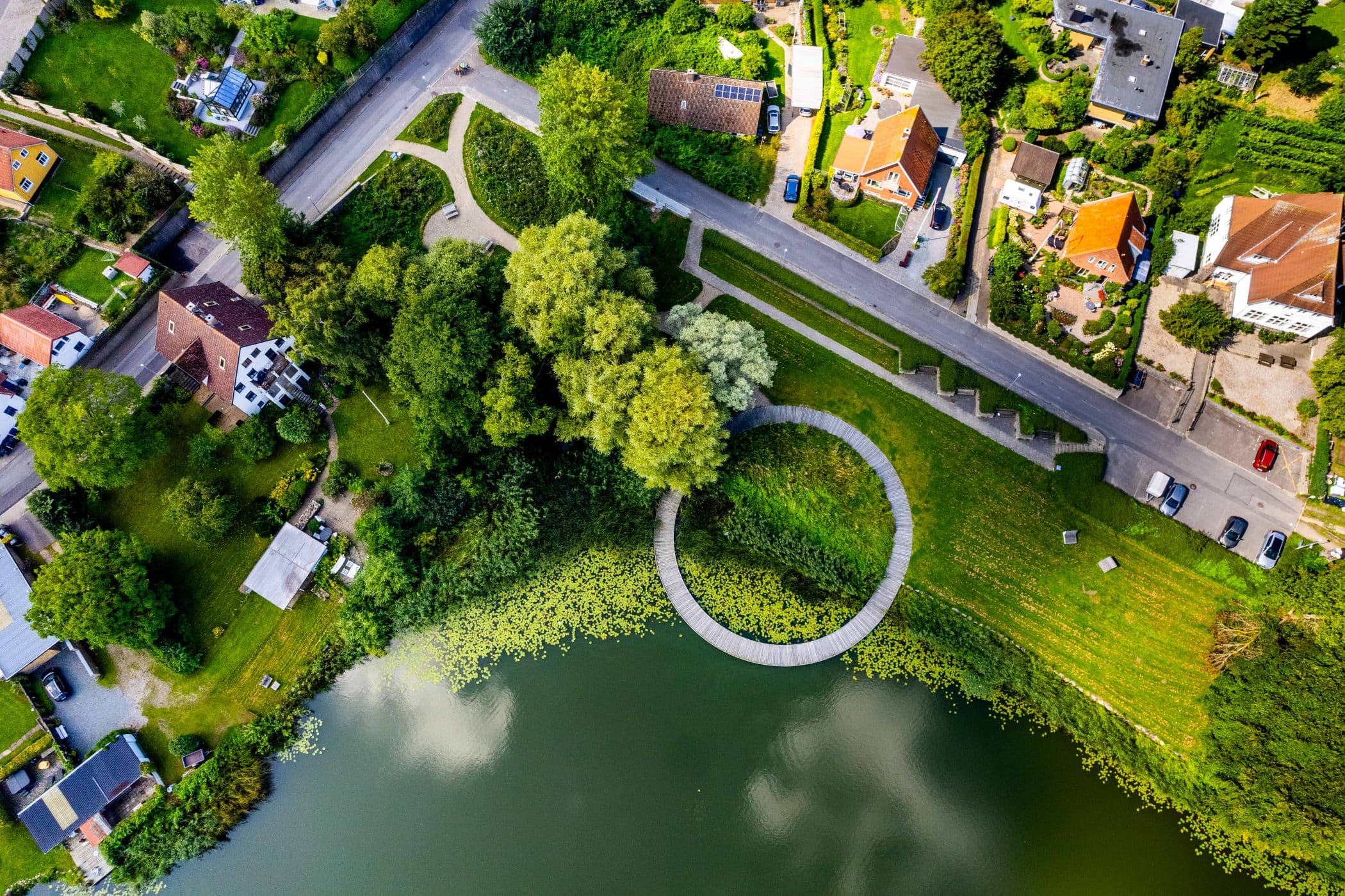
In Denmark, Sønderborg is set to achieve a carbon-neutral energy system by 2029 – positioning the city as a green frontrunner in Europe. Its business-first mindset powers that success. Working alongside ten industries with the highest energy consumption, the municipality creates viable business cases, setting in motion the economic tipping points that propel the climate transition.
This article was originally published on the NetZeroCities website, here.
A small city with a grand vision
Nestled on the southern coast of Denmark, Sønderborg is a small waterfront city where history, innovation, and maritime culture converge. Despite a modest population of 74,000, its influence far exceeds its size. The city can punch above its weight thanks to its powerful triple helix partnership between academia, government and business that’s making decarbonisation economically irresistible.
“One of the questions we hear most often from visiting cities is not about the technology. It’s about the partnership model,” Søren Revsbech Dam, Senior Project Lead, Industry & Energy Systems, ProjectZero. “They want to know how we brought the private sector into the transition. That public-private collaboration has been one of the most important factors in making progress possible.”
That collaboration sits at the heart of Sønderborg’s ProjectZero, launched in 2007 with the goal of making the city’s entire energy system carbon neutral. And by 2025, the approach reduced energy-related CO₂ emissions by a whopping 79%. But the pressure is on to reach the last mile, and the city hopes to make the last domino fall to tip the market. To keep momentum strong, Sønderborg joined the NetZeroCities Pilot Cities Programme, led by Climate KIC, to strengthen the business cases behind two major challenges: reusing industrial waste heat and electrifying heavy transport, like vans and trucks.
The municipality becomes an industry catalyst
After years of bringing energy companies, public institutions, and private stakeholders together via ProjectZero, city leaders emerged as industry catalysts, redefining how municipalities can lead the transition. “The reason we’re able to make a difference is that we come with something to offer companies,” says Dam. “We provide support, connect them with other partners and expertise, and help them work through challenges, like improving their competitiveness. This helps companies understand where investments can create both environmental and economic value.”
According to Dam, companies are eager for support. “For small- and medium-sized businesses with less resources, we can really see the difference it makes in shifting investment in green solutions,” he says. Part of that support comes through co-developing and showcasing a growing portfolio of examples where low-carbon solutions are the most attractive choice. From heat reuse in hospitals, to slashed emissions in supermarkets, to diesel-free ferries, to farms producing food and energy together. Each case not only highlights cost-effective pathways – it also lowers perceived risk for others to follow suit. But even with excellent use-cases, taking market transformation head on is not an easy battle. A collision of policy, practicality and profitability conjure up the perfect storm for businesses to navigate. That’s why investigating the shadowed corners of heat reuse and truck fleet electrification took centre stage to transform ten of the largest energy consuming companies in the municipality.
Moving heat is a trickier sell, but local industries hold the key
Sønderborg Hospital is a shining example of internal waste heat recovery. Hospitals require significant cooling for medical equipment and operations, creating large amounts of excess heat. Using heat pumps, the hospital captures and reuses that energy onsite, covering 91% of its heating demand.
With a close match between cooling and heating demand throughout the year, this business case is a clear win. The payback period is also shorter, making new investments easier to justify. “Every city that visits us says, ‘We need to go back and get that in our hospitals at home’,” says Dam. “Our pilot project built on that ambition. We knew those ten major industries had heat to capture and reuse, and the project is helping us turn that potential into viable business cases and make it a reality.” But the bigger challenge to wrestle is moving that excess energy over longer distances.
“We’re trying to create the business case for connecting industrial waste heat to the district heating network. But that’s challenging. The payback time is much longer than what industrial companies prefer,” says Dam. “However, district heating companies are used to those long-term investment horizons, so we need them to make the investment.”
To turn that ambition into something tangible, the city spotted a ripe opportunity. Sparsely populated rural areas often lack district heating networks. So when a district heating company planned to expand its network there, a local slaughterhouse could become the anchor customer. The slaughterhouse, as well as a local brickworks, can feed excess heat into the network, creating a cheaper local energy source for the community. “It’s already a fantastic success story, thanks to partnerships between heating companies, industries and citizens where we could jointly develop these solutions. And the pilot project really enabled this kind of collaboration,” says Dam.
But tipping markets also requires policy change. Companies that pipe waste heat to neighbouring districts currently get no ESG credit for it. In practice this means that a company venting heat into the atmosphere and one heating homes are treated identically in carbon accounting.
“If we can change that, the investment equation shifts dramatically, and we would have much faster implementation,” says Dam. “Because then companies would not look only at the business case, it would be a benefit for them in any case.”

Looking at benefits beyond the price tag
Transport presents a different challenge. There are no legal CO₂ mandates that would move the market. So the case for electrification must be made on commercial terms alone. And the city knew the time to do it was now.
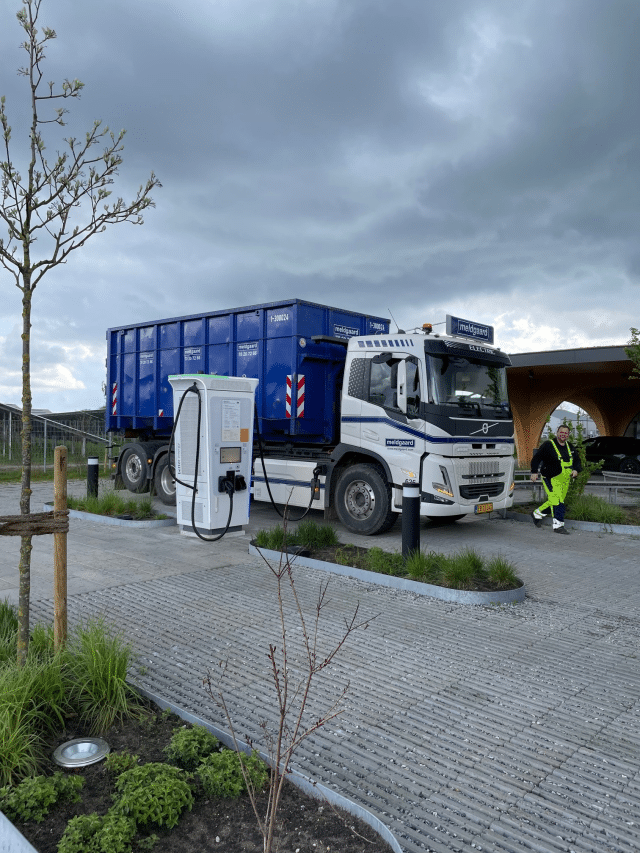
“We really are at a tipping point. Trucks are available with much longer range, and dedicated truck charging infrastructure is being built out. Now it’s about communicating that the economic case for electrification makes sense for many more applications and use cases,” says Philip Baxter, electrification specialist and consultant to ProjectZero.
But when the city began pressing the pedal forward, they hit an unexpected speed bump.
“We initially approached the ten biggest industrial companies to set fleet electrification in motion,” says Baxter. But the team quickly learned that eight of ten companies didn’t control those decisions. “We pivoted and engaged transport and logistics operators.” Early discussions kicked off with compelling evidence. Newer electric trucks now offer larger and more capable batteries, allowing drivers to recharge during legally required rest breaks and continue their routes more flexibly.
“Until last year, that wasn’t possible, the batteries were too small. And drivers had to prioritise charging over delivery,” says Baxter. Charging infrastructure is evolving too. Instead of companies needing to build their own charging networks, dedicated providers are now making it more accessible and affordable. “With the availability of better technology, we expect more suppliers to enter the market, more competition, and the price to drop, making the business case stronger.” Yet despite these advances, nearly every conversation arrived at the same conclusion.
“We got a clear input that it would be great to transport with electric trucks, but it needs to be cheaper,” says Baxter. The sticker price for a new electric truck is about €350,000 versus roughly €150,000 for diesel. So the municipality laid out the bigger picture.
“We’re helping companies look at the total cost of ownership. Lower energy costs, longer vehicle lifetimes, a more comfortable work environment for drivers, and other operational savings,” says Baxter. “And when we tell people about the capabilities of the latest electric trucks, the investment makes more financial sense and there is genuine interest.”
Now, some companies see value beyond direct costs. Being early adopters can help their services stand out in a soon-to-be competitive market. For example, delivering animal feed to farms via electric trucks adds a compelling dimension to a farm’s broader sustainability story.
The municipality can tip the scales, too
To unlock the potential of this dynamic and evolving market, the city recognises it must lead by example. “The municipality can also electrify their own trucks and influence the wider market through procurement,” says Dam. When cities purchase services and select suppliers, they also shape demand. To motivate change throughout the supply chain, they can require electric delivery from contractors.
“These things go hand in hand. The city cannot request this from suppliers without implementing it ourselves,” expressed Dam. “And one of the key things we can do is showcase it can be done without extra cost. More than a year ago, you’d have to pay 15% extra to electrify. And now as the market changes, the costs are falling.” The city also recognises that replacing a fleet of diesel trucks is not as simple as swapping one vehicle for another. It requires evolving the business model. “Electrifying heavy transport is not just about replacing diesel with electricity. It often requires rethinking route planning, charging patterns and day-to-day operations,” says Dam.
Even so, the city urges companies to begin the transition rather than waiting for a perfect solution. “The companies that get started now, with just one or two electric trucks, get the immediate benefit on both the operations and learning side.” This learning feeds into Sønderborg’s bigger goal: scale these solutions at home and later across Europe. But the city knows well that every business has different needs and challenges. By partnering with a local AI company, they hope to tackle this by offering customised, concrete solutions.
“The idea is to combine specific data on energy consumption and companies’ processes, and guide AI into making very specific solutions, like pathways to update business models and create realistic implementation plans,” says Dam.
That approach is now being piloted with a small group of companies to test whether it can deliver meaningful results. And if successful, they’ll continue the journey of building strong business cases that have the power to tip the first domino and trigger a cascade of change.
Explore more of the city’s exciting climate transition journey on electrifying heavy transport, circular heating flows in district heating networks, and other invigorating solutions, from inland farms to coastal ferries.