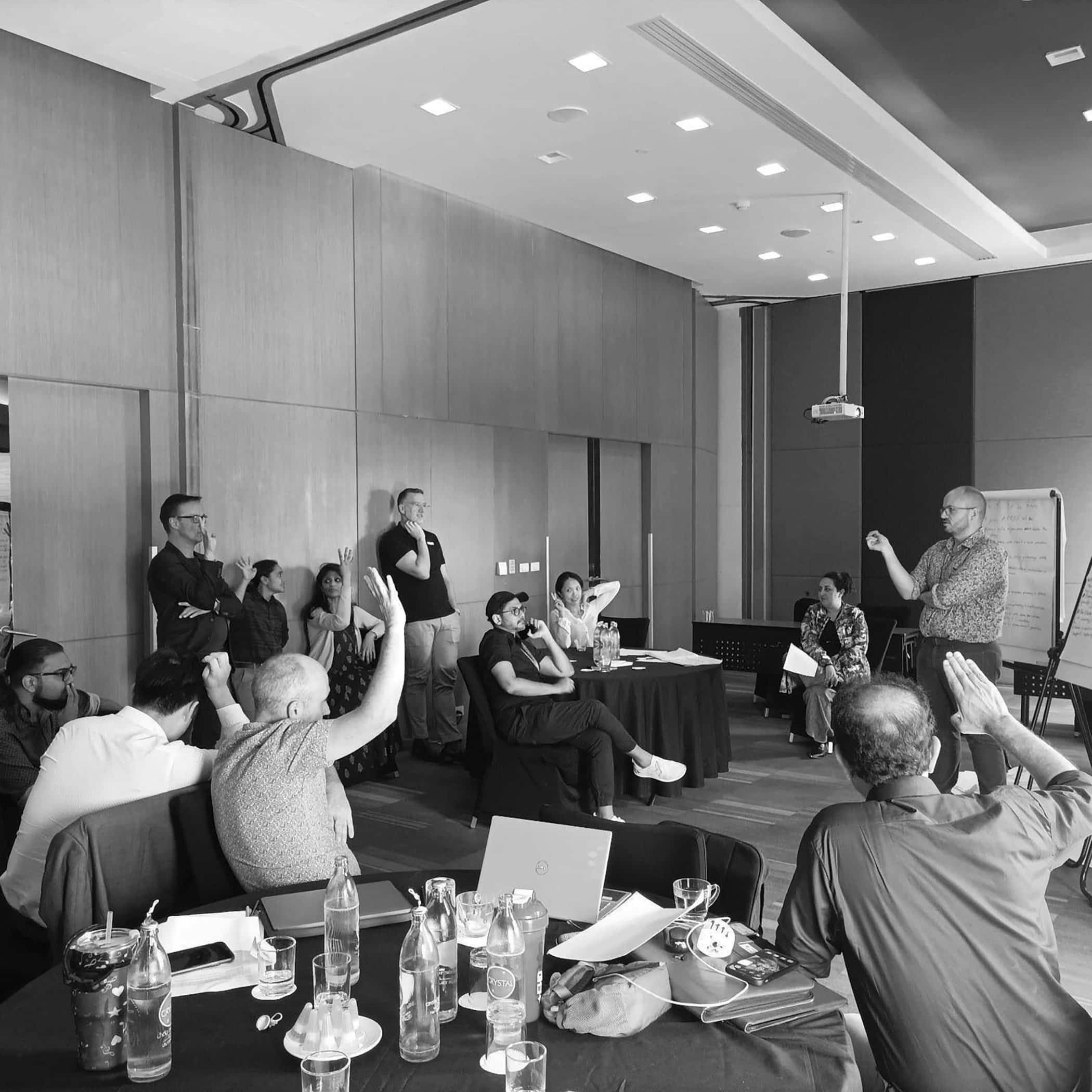
This learning paper on funding and entrepreneurship support for adaptation and resilience is a collaboration between SILP and the Climate Adaptation Innovation & Learning Initiative project. It brings together real-world insights from a community of 25 practitioners working across intermediary roles in the climate adaptation and resilience sector.
Rather than presenting a fixed model, the paper explores how intermediaries operate in the “in-between spaces”, navigating tensions between funders and communities, certainty and emergence, delivery and learning. It highlights the practices already being used in these spaces, and what is needed to enable more effective, equitable, and adaptive transformation.
We’ve designed this paper as a practical tool — offering insights to challenge assumptions, open dialogue, and support reflection within your own organisation or community.
Managing and nourishing partnership takes time. It takes a lot of time and it need to be accounted for. It should be clear that is the role of intermediary organisations and should be budgeted and fundraised for.
Georgina Ward-Booth
The horizontal connections that intermediaries can create slowly begin to break down the vertical structures that exist.
Kanika Verma
The polarity that we have, is what donors see as the most important impact and what the community sees as the most important impact. Normally those things are not really the same at the end of the day.
Ian Matimba
I think the research skill set of being able to synthesise findings and identify commonalities and differences across projects in the same space is incredibly important for intermediaries. It enables them to distil insights and share clearly with funders what is working and what isn’t.
Prerna Singh
The Climate Adaptation Innovation Learning project is financed by the Global Environment Facility (GEF) and implemented by the United Nations Industrial Development Organization (UNIDO) in collaboration with Climate KIC, the Global Adaptation and Resilience Investment Working Group (GARI) and the United Nations Environment Programme Finance Initiative (UNEP FI).