
Climate-KIC Flagship BTA presents the success factors for large scale retrofitting
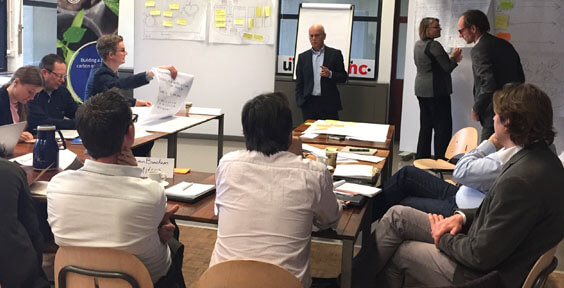
On 24 January 2017 Climate-KIC organised a workshop on deep retrofitting of houses based on interviews with key stakeholders of the Dutch sector. The dialogue between the participants during the workshop brought up some interesting suggestions for follow-up.
Main goal of the workshop was to get a better understanding of main drivers and barriers for retrofitting of houses in the Netherlands. Based on the outcomes of this workshop, BTA wrote the report “Drivers and Barriers of Deep Retrofitting in the Netherlands”. Click here to download the report.
Some background information
 The Paris Agreement on Climate Change requires huge steps to be taken in the built environment. One of the key focus areas in this respect is large scale upgrading of the energetic performance of existing housing stock. In the Netherlands alone around 6 million houses and utility buildings need to be deeply retrofitted to make them energy neutral or even energy producing by 2050 (if possible and preferably before that). Whereas we quickly need to move toward a yearly volume of 200,000 houses to be deep-retrofitted and despite high ambitions at the level of local and regional authorities, most “zero-at-the-meter” renovation initiatives remain stuck at the pilot or experimentation phase.
Study for a better understanding
Under the umbrella of the Urban Transition theme a study was initiated by Climate-KIC Benelux to get a better understanding of main drivers and barriers for retrofitting of houses in the Netherlands. The study, led by TNO and co-hosted by Climate KIC’s Building Technologies Accelerator (BTA) programme, involved interviews with key stakeholders in the field from both the renovation demand and supply side. The most important finding was that there is no pace yet, since demand and supply side are waiting for each other. More results were presented and discussed in the workshop, with participants from local and regional authorities, social housing corporations, building sector and science.
“Deep Refurbishment in Europe is the main priority for our Building Technologies Accelerator programme. For our future activities in BTA, it is essential that we keep in close contact with stakeholders from demand as well as supply side.” – Sybren Steensma, Business Developer BTA
Six success factors identified
The attendees agreed on the main key success factors needed for large scale retrofitting:
- Adequate regularly and legal framework

- Technical innovation (both development of new and integration of existing technologies)
- Improvement of the level of organization in the building sector through supply chain integration
- Optimization of solutions at the level of individual buildings through integration with the opportunities/challenges at a district level
- New financial arrangements
- More responsive attitude towards the wishes of clients, i.e. residents as end users of the houses.

A very open dialogue
The participants were also asked to give suggestions for Climate-KIC’s role in the field of deep renovation of the Dutch building stock. Responses varied from drawing up a roadmap for deep retrofitting, more demonstration of innovative solutions, look beyond borders (both sector and country), open doors, and also: just do it. It was agreed that a follow-up event will be organized in May or June 2017 around a number of urban innovation projects and start-ups with relevant products/services. Also, BTA will contact some of the participants to explore opportunities for co-operation.
For more information, please contact Sybren Steensma.